

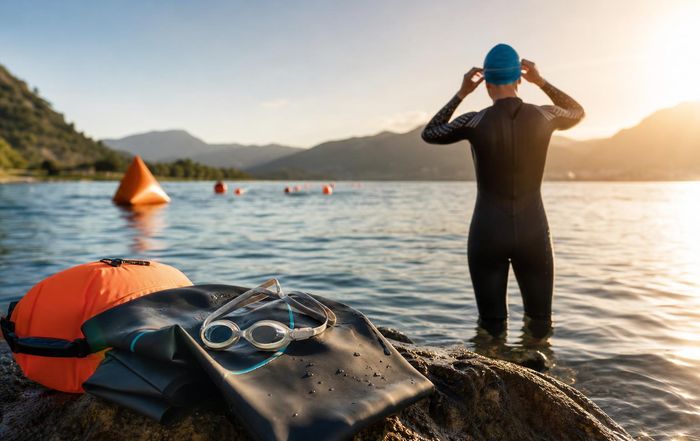
How to Prepare for Your First Open-Water Swim
For many pool swimmers, triathletes, and fitness enthusiasts, the first open-water swim feels like a big leap. There is no black line to follow, no lane ropes, and often no walls to rest on every 25 or 50 meters. Water can be colder, visibility lower, and conditions unpredictable. Yet open-water swimming can also be one of the most rewarding ways to build endurance, improve mental resilience, and connect with nature. Preparing well-physically, technically, and mentally-turns that first outing from something daunting into something genuinely enjoyable.
This helpful guide focuses on preparation: how to train, what to expect, how to stay safe, and how to manage the unique demands of swimming in lakes, rivers, and oceans. It is aimed at fitness swimmers, triathletes, and newcomers who are comfortable in a pool but new to outdoor water.
Pool to open water: what really changes?
Moving from pool to open water is not just about swimming farther; it is about adapting to a different environment. In a pool, temperature is controlled, water is clear, and you can push off the wall regularly, which subtly breaks up the workload. Outdoors, water may be colder, choppier, or moving (in rivers and oceans), and you must navigate without fixed visual guides. This means your heart rate, breathing, and perception of effort can feel very different, even at similar speeds.
Several factors make open-water swimming uniquely challenging. First, the absence of walls means you lose micro-rests and momentum boosts, so your endurance needs to be stronger than pool distance alone would suggest. Second, environmental stressors-such as cold, waves, wind, or the sight of deep, dark water-can trigger anxiety and faster breathing. Third, you need additional skills such as sighting, swimming straight without lane ropes, and handling contact with other swimmers in events. Understanding these differences helps set realistic expectations: if your first open-water attempt feels harder than pool training, that is normal rather than a sign that you are unfit.
Recognizing the environmental shift also shapes your preparation plan. A good approach combines targeted pool training, specific open-water skills practice, and gradual exposure to the conditions you will face on the day, whether that is a calm lake, tidal sea, or river course. This blend helps you preserve the fitness and technique you built in the pool while layering on the confidence and adaptability needed outside.
Build a training base before you go outdoors
Before attempting your first proper open-water swim, it is wise to be comfortably able to swim the intended distance in a pool without stopping. For many new triathletes or fitness swimmers, that might be 500-1,500 meters. Being able to cover the distance continuously in the pool gives you a safety margin when conditions feel tougher in open water. It also frees up mental bandwidth so you can focus on navigation, breathing, and staying relaxed rather than simply surviving the distance.
A simple approach is to structure your pool training around three types of sessions: endurance, technique, and speed or strength. Endurance sets-such as 3-4 × 400 m with short rest, or a continuous 1,000 m swim-build the aerobic base you will rely on outdoors. Technique-focused sessions emphasize body position, efficient kick, relaxed recovery, and bilateral breathing, all of which help you cope with waves and variable conditions. Shorter, faster repeats (for example, 10 × 50 m or 8 × 100 m at a strong but sustainable pace) develop strength and comfort swimming at a slightly higher intensity than you will likely need in open water, giving you a buffer on the day.
It can be helpful to incorporate "no-wall" sets where you turn without pushing off, simulating the continuous effort of open-water swimming. You might also practice swimming with minimal rest between sets to mimic the steady-state feeling of a lake or sea swim. For more structured plans, organizations such as USA Swimming and Swim England publish training guidance for distance swimmers on their websites at https://www.usaswimming.org/ and https://www.swimming.org/, which can be adapted for fitness or triathlon goals.
Learn key open-water skills while still in the pool
Several open-water skills can and should be rehearsed in the pool long before your first outdoor session. One of the most important is sighting-lifting your eyes briefly to spot a landmark or buoy while maintaining a steady stroke. In the pool, you can practice "alligator eyes," where you lift your head just enough for your eyes to clear the surface while keeping the rest of your head low, then turn to breathe as usual. Integrating this into your normal rhythm, say every 6-10 strokes, helps prevent neck strain and keeps your body position streamlined.
Bilateral breathing (breathing to both sides) is another valuable skill, even if you do not use it constantly in open water. Being able to breathe to either side allows you to avoid waves or spray, keep an eye on other swimmers, and maintain a straighter line when currents or wind favor one side. In the pool, you might start with every third stroke breathing, then progress to sets where you alternate breathing sides every length. Over time, this builds flexibility in your stroke pattern, which is useful when conditions are uneven.
It is also worth practicing swimming in closer proximity to others, especially if you are preparing for a mass-start event. Ask training partners to swim in the same lane and deliberately simulate light contact on arms or legs so that you become used to the sensation without panicking. Triathlon-focused resources from bodies like World Triathlon at https://www.triathlon.org/ and British Triathlon at https://www.britishtriathlon.org/ offer drills and tips on drafting, starts, and turns that can be incorporated into your pool practice.
Understand safety basics and choose a suitable venue
Safety is the foundation of any open-water plan, especially for a first swim. Before you go, it is essential to understand local conditions, legal access, and basic risk factors. The safest option for beginners is often an organized, supervised venue such as a lifeguarded lake, a designated open-water swimming facility, or a marked area at a beach with professional lifeguards. Many countries have national lifesaving or water safety organizations, such as the Royal National Lifeboat Institution (RNLI) in the UK at https://rnli.org/ or the United States Lifesaving Association at https://www.usla.org/, which provide detailed guidance on safe swimming areas and flags.
Key hazards to consider include water temperature, currents or tides, boat traffic, water quality, and entry/exit points. Cold water can be particularly dangerous due to cold-shock response and the risk of hypothermia, even in relatively mild weather. Agencies like the U.S. Coast Guard at https://www.uscg.mil/ and Water Safety New Zealand at https://watersafety.org.nz/ emphasize gradual acclimatization and appropriate clothing-often a wetsuit-for temperatures below about 20°C (68°F), though individual tolerance varies.
Before your first swim, check local water quality reports if available; many municipal or environmental agencies publish updates, and organizations such as the U.S. Environmental Protection Agency at https://www.epa.gov/ or the European Environment Agency at https://www.eea.europa.eu/ provide broader guidance on bathing water standards. Avoid swimming alone: go with a friend or join an organized group, and let someone on shore know your plan and expected return time. A brightly colored swim cap and a tow float increase visibility to boats and lifeguards and provide a small amount of extra buoyancy if you need to rest.
Gear up: what you really need for your first outing
Open-water swimming does not require a huge amount of specialized gear, but the right basics make your first experience safer and more comfortable. A well-fitting wetsuit designed for swimming can significantly improve buoyancy and warmth, especially in cooler waters. Unlike surfing wetsuits, swim-specific suits typically offer more shoulder flexibility and a smoother outer surface for reduced drag. Many triathlon and swim brands provide entry-level suits, and some organized venues offer rental options so you can test fit and buoyancy before committing.
Goggles are equally important, and you may find that a different style works better outdoors than in the pool. Larger-profile or mask-style goggles can provide a wider field of vision, which helps with sighting buoys and other swimmers. Tinted or polarized lenses can also reduce glare in bright conditions. A brightly colored silicone cap improves visibility and adds a bit of warmth; in colder conditions, a neoprene cap or earplugs can help reduce the "ice-cream headache" sensation from cold water exposure.
Beyond these essentials, consider a tow float or safety buoy, particularly if you are not in a tightly controlled venue. These devices, which attach to your waist via a short leash, make you more visible and give you something to hold onto if you need a break without leaving the water immediately. For additional guidance on equipment, federations like World Aquatics at https://www.worldaquatics.com/ and triathlon bodies often publish open-water kit recommendations that balance performance and safety.
If your open-water swimming is part of a broader training lifestyle, it can be useful to integrate gear discussions into your overall approach to fitness training, ensuring your choices support both pool work and outdoor sessions without unnecessary duplication.
Acclimatize gradually to cold and unfamiliar conditions
Even strong pool swimmers can be surprised by how their body reacts the first time they enter cold or dark open water. Cold-shock response-an involuntary gasp and rapid breathing when you first immerse-is a normal physiological reaction. The World Health Organization notes at https://www.who.int/ that sudden immersion in cold water can increase heart rate and blood pressure, which is why it is critical not to dive in or start swimming hard immediately. Instead, enter slowly, allow water into your wetsuit, and spend a minute or two near the shore or entry point focusing on slow, controlled breathing until the initial shock subsides.
Gradual acclimatization over multiple sessions is more effective and safer than trying to "tough it out" on day one. Start with short swims-perhaps 5-10 minutes-and extend duration only as you feel comfortable. Pay attention to early signs of cold stress such as uncontrolled shivering, numbness in hands or feet, or slurred speech, and exit the water promptly if they appear. Have warm clothing, a hat, and a hot drink ready for after your swim; rewarming on land is an important part of safety planning, not an optional comfort.
Acclimatization is not just about temperature. The feel of waves, the sight of deep water, and the absence of lane markings can all be disorienting. Some swimmers find it helpful to start by swimming parallel to shore in shallow water, where they can stand if needed, before moving to deeper or more exposed areas. Joining an experienced group or club can provide both reassurance and practical tips on reading conditions. Many national governing bodies, such as Swim Ireland at https://www.swimireland.ie/, offer open-water induction sessions that combine safety briefings with short, supervised swims.
Practice navigation, pacing, and swimming straight
Once you are comfortable entering the water and managing the initial shock, the next step is to practice the core skills that make open-water swimming efficient: navigation, pacing, and swimming in a straight line. Unlike in the pool, you cannot rely on a black line or lane ropes to keep you on course. Instead, you must "sight" periodically to orient yourself towards buoys, shoreline landmarks, or other reference points. A common pattern is to lift your eyes briefly every 6-10 strokes, then resume normal head position. Too much sighting wastes energy and can drop your hips; too little can send you off course, adding distance and time.
Pacing is equally important. Many first-timers start too fast, driven by nerves or the excitement of an event start, and then struggle with breathlessness or anxiety. A good rule is to begin at a pace that feels slightly easier than your usual training speed and allow your body to settle for a few minutes before adjusting. Using your pool experience as a guide, you might imagine swimming at a comfortable "long set" pace rather than a sprint. If you are training for a triathlon, remember that you still need energy for cycling and running, so conservative pacing is usually wise.
Swimming straight without lane ropes is partly a technique issue and partly a mental discipline. Bilateral breathing can help balance your stroke, but many swimmers naturally pull more strongly with one arm. In training, you can periodically close your eyes for a few strokes in calm water (with a coach or friend nearby) to feel whether you veer to one side, then work on evening out your pull and catch. Over time, these skills feed into your broader endurance and physical performance, making open-water sessions a valuable complement to pool work.
Build a simple pre-swim checklist and routine
Having a consistent routine before each open-water swim reduces anxiety and helps ensure you do not overlook important safety steps. Start with environmental checks: look at the water surface for signs of strong currents, large waves, or heavy boat traffic; note wind direction and strength; and confirm water access and exit points. If lifeguards are present, ask about local hazards such as submerged rocks, sudden drop-offs, or recent changes in conditions. This habit supports not just individual safety but also broader wellness, since feeling prepared often reduces stress.
Next, run through your personal readiness: Are you well-hydrated and have you eaten appropriately for the planned duration? Do you have any injuries or health concerns that might limit your swim? Guidelines from organizations such as the American Heart Association at https://www.heart.org/ and Mayo Clinic at https://www.mayoclinic.org/ emphasize listening to your body and seeking medical advice if you have cardiovascular or respiratory conditions before taking up open-water swimming.
Finally, check your equipment: wetsuit zipped, goggles adjusted, cap on, tow float attached if using one, and any timing chip or event number secured if you are racing. Agree on a route and time limit with your swim partner or group, and ensure someone on shore knows your plan. Over time, this routine can become as automatic as packing your gym bag for a fitness session or run, allowing you to focus on the experience rather than logistics.
Manage anxiety, panic, and the mental side of open water
Even confident pool swimmers sometimes experience anxiety or panic in open water, especially on their first few attempts. Common triggers include the sensation of cold on the face, the sight of deep or murky water, unexpected contact with plants or debris, or the feeling of being far from shore. Recognizing that this response is common-and usually temporary-helps reduce its power. Your goal is not to eliminate nerves entirely but to develop tools to manage them.
One effective strategy is to have a scripted "calm-down" protocol. If you feel panic rising, roll onto your back or switch to breaststroke, focus on long, slow exhales, and look at a stable reference point such as the horizon or shoreline. Remind yourself that you can stop, float, or swim back at any time; you are not trapped. After a minute or two, many swimmers find their breathing and heart rate settle enough to resume front crawl at an easier pace. Practicing this switch between strokes in the pool can make it feel more natural when you need it outdoors.
Mental rehearsal and visualization can also be useful. Before your first open-water session or event, spend a few minutes imagining each phase: entering the water calmly, feeling the initial cold but breathing through it, finding your rhythm, and exiting the water with a sense of achievement. Sports psychology resources from organizations like the American Psychological Association at https://www.apa.org/ and national sport institutes often highlight visualization as a tool to reduce pre-event anxiety and improve performance. Over time, these mental skills support not only open-water swimming but also broader health and stress management in daily life.
Integrate open-water swimming into your overall training and lifestyle
Once you have completed your first open-water swim, the next step is to decide how it fits into your ongoing fitness or triathlon journey. Some swimmers use open water as a weekly endurance session, complementing two or three pool workouts focused on technique and speed. Others treat it as a seasonal activity, building towards specific events such as 1-3 km charity swims, 5 km challenges, or triathlons. Integrating your swims into a broader lifestyle approach-balancing strength training, mobility work, and recovery-can help prevent overuse injuries and burnout.
Open-water swimming can also be a social and cultural experience. Many cities now have clubs, meet-ups, or informal groups that swim year-round, sharing knowledge about local conditions and organizing events. This community aspect can boost motivation and accountability while offering a safer environment than swimming alone. Event calendars from national federations, local triathlon clubs, and reputable sports organizations such as World Triathlon or World Aquatics can help you discover races or group swims that match your level and interests.
For those interested in performance, tracking your progress-whether via GPS watches, event results, or simple time estimates between landmarks-can be motivating. However, it is important to remember that open-water times are heavily influenced by conditions, so comparisons across different days or venues are less meaningful than in the pool. Many experienced swimmers focus instead on perceived effort, comfort, and technical execution as primary markers of improvement. Combined with good nutrition guidance, which you can explore further through resources on nutrition, this perspective supports sustainable progress rather than short-term obsession with speed.
Turning your first open-water swim into a positive milestone
A first open-water swim is a milestone in any swimmer's journey, blending fitness, skill, and a measure of adventure. With a solid pool base, targeted skill practice, careful venue selection, appropriate gear, and respect for safety and conditions, most reasonably fit swimmers can make the transition smoothly. The initial nerves and unfamiliar sensations usually give way-often surprisingly quickly-to a sense of freedom and flow that is hard to replicate indoors.
The aim is not perfection on day one. It is to come out of the water wanting to go back in. By progressing gradually, listening to your body, and drawing on guidance from reputable organizations-from national swimming federations and triathlon bodies to health and safety agencies-you can build a sustainable relationship with open-water swimming that enhances both your physical conditioning and your overall sense of wellbeing. Over time, what begins as a single tentative outing can become a cornerstone of your training, a gateway to new events, and a different way to experience the natural world.