

Wellness Spaces That Encourage Healthier Communities
Redefining Wellness for a Global, Urbanized World
So wellness is no longer confined to gyms, spas, or short-lived New Year's resolutions; it is increasingly embedded into the physical and digital spaces where people live, work, commute, and socialize. As cities from the United States and Canada to Singapore, Germany, and Brazil grapple with aging populations, chronic disease, climate stress, and widening inequality, the design of "wellness spaces" has become a strategic priority for governments, employers, developers, and community leaders. For FitBuzzFeed.com, whose main fans span fitness enthusiasts, corporate decision-makers, health professionals, and technology innovators across North America, Europe, Asia, Africa, and South America, understanding how these environments are being reshaped is central to navigating the next decade of health, business, and lifestyle.
This transformation is driven by a growing body of evidence from institutions such as the World Health Organization and OECD showing that urban form, building design, and social infrastructure significantly influence physical activity, mental health, productivity, and healthcare costs. Readers who follow broader health trends can explore how the built environment affects noncommunicable diseases through resources such as the WHO pages on healthy cities. At the same time, the wellness economy, tracked by organizations like the Global Wellness Institute, has expanded into a multi-trillion-dollar global market, with wellness real estate, workplace wellness, and fitness technology becoming mainstream investment themes that intersect directly with the editorial focus of FitBuzzFeed Business, Technology, and Lifestyle.
From Gyms to Integrated Wellness Ecosystems
Traditional gyms and fitness studios once served as the primary destination for people seeking physical activity, but in 2026, wellness spaces have evolved into integrated ecosystems that blend exercise, mental health support, nutrition, social connection, and workplace performance. In major cities such as London, New York, Berlin, Singapore, and Sydney, mixed-use developments now routinely combine residential units, co-working offices, green public plazas, and performance-focused fitness facilities in a single complex, often certified under frameworks like LEED or the WELL Building Standard. Those interested in the technical standards shaping these developments can review the International WELL Building Institute's resources for a deeper understanding of how air quality, light, sound, and movement are integrated into building design.
This integrated approach reflects a shift away from viewing fitness as an isolated activity and toward a more holistic model of human performance and resilience. For readers of FitBuzzFeed Fitness and Training, this means that strength, endurance, and mobility are increasingly supported by environments that also prioritize recovery, sleep, stress management, and social support. In many corporate campuses and innovation hubs, on-site fitness centers have expanded into multi-zone wellness suites that include quiet rooms for mindfulness, medically supervised recovery technologies such as infrared saunas and compression therapy, and nutrition-focused cafes offering evidence-based meal options aligned with guidelines from organizations like the Harvard T.H. Chan School of Public Health, where readers can learn more about healthy dietary patterns.
Designing Cities That Move People
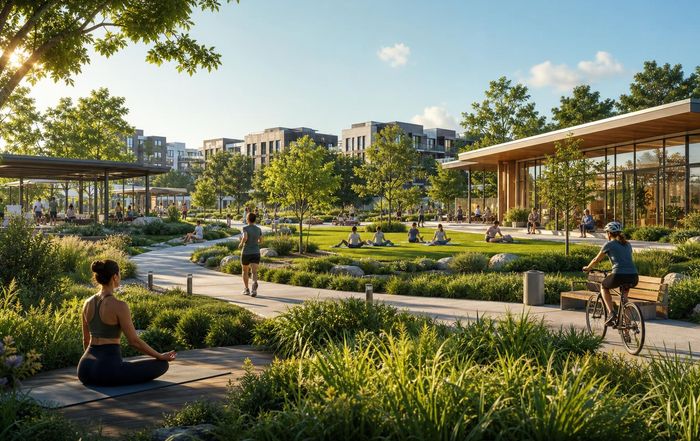
The most powerful wellness spaces are often not behind membership paywalls but woven into the public fabric of cities and neighborhoods. Urban planners in regions as diverse as Scandinavia, East Asia, and North America are increasingly adopting "active design" principles to encourage walking, cycling, and recreation as default choices rather than exceptional efforts. Cities such as Copenhagen, Amsterdam, and Singapore, frequently highlighted by UN-Habitat, have demonstrated how protected cycling infrastructure, pedestrianized streets, and accessible public transit can reduce car dependency and improve population health; those interested in the policy dimension can explore UN-Habitat's work on public space to understand the governance frameworks behind these changes.
For the FitBuzzFeed audience, which closely follows Sports and World developments, the convergence of urban design and athletic culture is particularly visible in the proliferation of multi-use sports parks, outdoor gyms, and community tracks. In cities from Los Angeles and Toronto to Seoul and Johannesburg, refurbished waterfronts and underutilized industrial zones have been transformed into active corridors where running trails, skate parks, basketball courts, and calisthenics areas coexist with cafes, co-working spaces, and cultural venues. These spaces not only support physical health but also function as informal networking hubs for entrepreneurs, coaches, and sports brands, reinforcing the link between wellness, innovation, and local economic development.
Workplace Wellness as a Strategic Business Asset
By 2026, the conversation about wellness spaces has firmly entered the boardroom. Employers in the United States, United Kingdom, Germany, Australia, and across Asia now recognize that the design of offices, factories, warehouses, and remote work hubs directly affects talent attraction, retention, engagement, and healthcare expenditures. Research from organizations such as Gallup and McKinsey & Company has consistently shown that employee well-being is correlated with lower turnover and higher productivity; business leaders can examine these relationships through resources such as McKinsey's insights on employee well-being and performance.
Leading companies are therefore investing in workplaces that prioritize natural light, flexible movement zones, biophilic design elements, and quiet areas for focused work and recovery. In high-performance sectors such as technology, finance, and professional services, employers increasingly provide on-site or nearby access to high-quality gyms, yoga studios, and mental health services, often integrated into broader benefit packages that include digital coaching, telehealth, and mental resilience programs. For readers tracking career trends through FitBuzzFeed Jobs, it is clear that candidates in competitive markets now evaluate potential employers not only on salary and title but also on the quality of wellness spaces and policies, from ergonomic workstations and flexible schedules to access to nature and movement-friendly office layouts.
Community Health Hubs and Preventive Care
Healthcare systems in countries such as the United States, Canada, the United Kingdom, and Singapore continue to struggle with rising costs and the burden of chronic diseases linked to inactivity, poor nutrition, and stress. In response, health providers and policymakers are experimenting with "community health hubs" that integrate clinical care with fitness, nutrition, and social services in a single, accessible location, often within or adjacent to residential neighborhoods. These hubs may combine primary care clinics with group exercise studios, cooking demonstration kitchens, counseling rooms, and open community spaces, promoting preventive health behaviors while reducing barriers to access.
Organizations like the Centers for Disease Control and Prevention (CDC) and Public Health England (now part of the UK Health Security Agency and Office for Health Improvement and Disparities) have long emphasized the importance of community-level interventions; readers can explore how community environments reduce chronic disease risk by reviewing the CDC's guidance on community health strategies. For FitBuzzFeed readers focused on Health and Wellness, these hubs represent a promising model that bridges the gap between prescriptive advice and lived experience, enabling residents to move seamlessly from diagnosis to action, supported by coaches, nutritionists, peer groups, and digital tools that track progress.
The Role of Nutrition-Focused Environments
Nutrition is a central pillar of community wellness, and in 2026, forward-looking cities and organizations are rethinking how food environments can either support or undermine health. From school cafeterias in France and Italy to corporate canteens in Germany, Canada, and Japan, there is a growing emphasis on whole foods, plant-forward menus, reduced ultra-processed options, and transparent labeling. Global guidance from institutions such as the Food and Agriculture Organization of the United Nations (FAO) and World Cancer Research Fund has influenced policy and procurement strategies; those interested in the evidence base can learn more about nutrition and cancer prevention and use it to inform both personal and organizational decisions.
For the FitBuzzFeed community, which frequently explores Nutrition and Lifestyle content, the most impactful food-related wellness spaces are often those that integrate education, access, and social connection. Urban farms on rooftops in New York, community gardens in London, and vertical farming initiatives in Singapore and the Netherlands are being paired with cooking classes, nutrition workshops, and local food markets. These initiatives not only increase access to fresh produce but also create social ties and a sense of shared purpose, supporting mental well-being and community resilience. Restaurants, hotels, and sports venues are also adapting, with many major brands collaborating with registered dietitians and sports nutrition experts to design menus that support performance, recovery, and long-term health, aligning their offerings with evolving consumer expectations around transparency and sustainability.
Technology-Enabled Wellness Environments
Technology has become a powerful enabler of wellness spaces, transforming how individuals interact with their surroundings and how organizations measure and optimize health outcomes. In 2026, smart buildings in markets such as the United States, South Korea, Japan, and the Nordic countries routinely integrate sensors that monitor air quality, temperature, occupancy, and noise levels, feeding data into building management systems that adjust conditions in real time to support comfort and productivity. Technology leaders and real estate developers often rely on standards from organizations like ASHRAE and the U.S. Green Building Council, whose LEED resources help guide the integration of health-oriented building technologies.
For FitBuzzFeed readers interested in Technology and performance, the most visible innovations are often found in connected fitness equipment, wearables, and digital platforms that personalize training and recovery based on biometric data. Advanced wearables now monitor heart rate variability, sleep stages, movement patterns, and even environmental exposures, providing feedback that encourages users to move more, rest better, and avoid harmful conditions. Gyms, sports clubs, and corporate wellness programs increasingly integrate these tools into their physical spaces, creating data-informed training zones, recovery lounges, and interactive coaching experiences that adapt to each individual's needs and goals. At the broader societal level, public health agencies and research institutions, such as the National Institutes of Health (NIH) in the United States, are exploring how anonymized data from these devices can inform policy and urban planning; readers can explore NIH perspectives on digital health to understand both the opportunities and ethical considerations.
Inclusive and Accessible Wellness for All Communities
A critical dimension of wellness spaces in 2026 is inclusivity. Historically, high-quality wellness environments-from boutique fitness studios to corporate wellness programs-have often been concentrated in affluent neighborhoods and industries, leaving lower-income communities, people with disabilities, and marginalized groups with limited access. In countries across Europe, North America, Asia, and Africa, policymakers, nonprofits, and social entrepreneurs are working to close these gaps by designing wellness spaces that are affordable, culturally relevant, and physically accessible.
Organizations such as The Robert Wood Johnson Foundation and The World Bank have documented how social determinants of health, including neighborhood safety, access to parks, and availability of affordable recreation, influence outcomes across the lifespan; those seeking a macro-level perspective can review World Bank analyses on healthy cities and resilience. Community-led initiatives, such as cooperatively managed gyms in South Africa, multi-generational fitness parks in Spain, and inclusive sports programs in Brazil and Malaysia, demonstrate that wellness spaces can be powerful tools for social cohesion when designed with local stakeholders. For the FitBuzzFeed audience, which spans regions from the United States and United Kingdom to Thailand, South Africa, and New Zealand, these examples underscore the importance of listening to community voices and ensuring that wellness investments do not exacerbate existing inequalities.
Events, Sports Culture, and the Social Fabric of Wellness
Major sporting events and community festivals continue to play a pivotal role in shaping how people experience wellness spaces. From global tournaments hosted in Europe and Asia to city marathons in Chicago, Berlin, Tokyo, and Cape Town, large-scale events temporarily transform urban environments into expansive wellness arenas where streets, parks, and public squares are reclaimed for movement, celebration, and shared achievement. For readers following Events and Sports on FitBuzzFeed, these occasions highlight the power of collective experiences to inspire long-term behavioral change, particularly when organizers collaborate with city planners and health agencies to leave lasting legacies such as improved infrastructure, new public facilities, and expanded active transportation networks.
Sports culture also influences how brands, employers, and local governments invest in wellness spaces. Global sportswear and equipment companies, including Nike, Adidas, and Under Armour, have partnered with municipalities and schools in countries from the United States and France to China and South Korea to develop community courts, tracks, and training zones that double as brand showcases and public amenities. Professional clubs in football, basketball, rugby, and cricket increasingly open their training facilities for community use during off-peak hours, leveraging their expertise in high-performance environments to support grassroots participation. These initiatives intersect with the interests of FitBuzzFeed readers who follow Brands, corporate social responsibility, and the evolving relationship between elite sport and community health.
Measuring Impact and Building Trust
As wellness spaces proliferate, the question of impact-whether these investments genuinely improve health, productivity, and community resilience-has become more pressing. Organizations across sectors are turning to data-driven evaluation, combining health metrics, usage statistics, employee engagement surveys, and economic indicators to assess the return on investment of wellness-oriented design and programming. Academic institutions such as Stanford University, Imperial College London, and Karolinska Institutet are actively researching the links between built environments and health outcomes; readers interested in the scientific underpinnings can explore resources such as Stanford's work on the built environment and health to better understand the evidence base.
However, measurement alone is not sufficient; trust is essential. Communities, employees, and consumers need confidence that wellness spaces are designed with their long-term interests in mind, rather than as superficial branding exercises. Transparent communication about the goals, design choices, and governance of wellness initiatives-along with mechanisms for ongoing feedback and co-creation-helps build this trust. For the FitBuzzFeed audience, which values credible, experience-based insights across Health, Wellness, and Business, it is increasingly important to distinguish between evidence-backed wellness environments and short-lived trends that lack depth or inclusivity.
The Strategic Opportunity for Leaders and Communities
In 2026, wellness spaces are no longer a niche concern of fitness enthusiasts or luxury developers; they represent a strategic opportunity for city leaders, employers, educators, investors, and community organizations across all regions, from North America and Europe to Asia, Africa, and South America. For mayors and urban planners, investing in parks, active transport infrastructure, and community sports facilities can reduce healthcare costs, attract talent, and enhance climate resilience. For CEOs and HR leaders, redesigning offices and remote work policies around movement, recovery, and psychological safety can strengthen employer brands and support sustainable performance. For school administrators and university leaders, integrating wellness into campuses-from classrooms and dorms to dining halls and sports facilities-can improve learning outcomes and student well-being.
FitBuzzFeed, with its cross-cutting coverage of Fitness, Wellness, Business, Technology, and World trends, is uniquely positioned to help readers navigate this evolving landscape. By highlighting best practices from cities like Stockholm, Singapore, and Vancouver, showcasing innovative employers in sectors from technology to manufacturing, and amplifying community-led initiatives in regions from South Africa to Brazil, the platform can support a more informed, empowered conversation about how wellness spaces are designed, funded, and managed.
Toward Everyday Wellness by Design
The trajectory of wellness spaces now suggests a future in which health-supportive environments are not exceptional amenities but everyday realities. As climate pressures intensify, remote and hybrid work models mature, and demographic shifts reshape societies in countries from Japan and Italy to Nigeria and India, the demand for spaces that support physical, mental, and social well-being will only grow. Advances in materials science, data analytics, and human-centered design will enable even more personalized and adaptive environments, while policy frameworks and investment models will determine whether these benefits are broadly shared or unevenly distributed.
For the sporty and fitness community the message is clear: wellness is no longer something to be pursued only in spare time or specialized venues; it is increasingly embedded in the streets walked, offices occupied, digital platforms used, and communities joined. By engaging with credible resources such as the World Health Organization, OECD, and leading academic and industry institutions, and by observing how local neighborhoods, employers, and governments are reshaping their spaces, readers can make more informed choices about where they live, work, invest, and advocate.
Ultimately, wellness spaces that encourage healthier communities are built not only from concrete, glass, and sensors but also from shared values, evidence-based design, and a commitment to inclusivity. As cities and organizations around the world continue to experiment and learn, platforms like FitBuzzFeed will remain essential in translating complex developments into practical insights, helping individuals and leaders alike to create environments in which health, performance, and community can thrive together.