

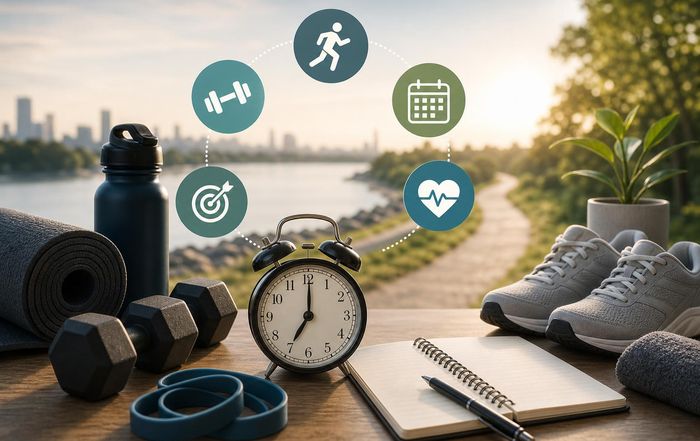
Training Consistency Tips for Fitness Active Adults
Why Consistency Matters More Than Motivation
Ok as hybrid work, digital health tracking, and global uncertainty continue to reshape daily life, active adults across North America, Europe, Asia, and beyond are discovering that the real competitive edge in fitness is not a perfect program or the latest wearable device, but the quiet discipline of consistency. While motivation rises and falls with mood, workload, and family pressures, consistent training builds a foundation that supports long-term health, sharper performance at work, and greater resilience in the face of stress. For the sports seekers of FitBuzzFeed-professionals who balance demanding careers with ambitions in sports, fitness, and wellness-understanding how to make training a non-negotiable part of life has become a strategic priority, not just a lifestyle choice.
Leading organizations such as World Health Organization emphasize that regular physical activity significantly reduces the risk of chronic disease and improves mental health outcomes; readers can review global physical activity guidelines to appreciate how consistency underpins these benefits. Yet many active adults in the United States, United Kingdom, Germany, Canada, Australia, Singapore, and other innovation-driven economies still struggle to train regularly, despite unprecedented access to digital coaching, connected equipment, and evidence-based programs. On FitBuzzFeed, where coverage spans fitness, health, business, and lifestyle, this tension between knowledge and execution is a recurring theme: people know what to do, but sustaining it week after week is the real challenge.
Consistency, therefore, must be approached as a long-term strategic project, one that integrates behavioral science, smart planning, and realistic expectations rather than relying on short bursts of enthusiasm. Active adults who treat their training like any other critical business initiative-planned, measured, and adjusted over time-are the ones who ultimately protect their health, extend their career longevity, and maintain a high quality of life well into their 50s, 60s, and beyond.
Building a Realistic Framework for Sustainable Training
A key reason many adults in cities from New York and London to Singapore and Sydney struggle to stay consistent is that they design training plans better suited to professional athletes than to professionals with families and demanding jobs. Instead of starting with idealized goals, a more effective approach begins with an honest audit of time, energy, and constraints. Trusted organizations such as Mayo Clinic provide guidance on how much exercise adults really need, and these recommendations are often more achievable than the extreme routines promoted on social media.
For readers of FitBuzzFeed, the first step is to translate those guidelines into a weekly rhythm that fits actual work and life commitments. A senior manager in Frankfurt or Toronto who travels frequently may decide that three structured strength sessions and two short conditioning sessions per week are sustainable, while a software engineer in Bangalore or Stockholm with a stable schedule might manage four or five training days. The key is to design a program that can be executed consistently for months, not just weeks. On the site's training and physical sections, this philosophy of realism over perfection is increasingly reflected in programming tailored to busy professionals.
Once a realistic framework is defined, it becomes easier to protect training time the way one would protect a critical client meeting or board presentation. Professionals who block training sessions into their calendars, communicate boundaries with colleagues and family, and treat those sessions as non-negotiable appointments are far more likely to maintain consistency. This mindset, echoing the project management principles used in high-performing organizations like McKinsey & Company, transforms fitness from a discretionary hobby into a core component of personal and professional performance.
The Role of Habit Architecture and Behavioral Science
Modern behavioral science has made it clear that willpower is too fragile to support long-term consistency on its own, particularly for adults juggling responsibilities in demanding economies such as the United States, Japan, South Korea, and the Nordic countries. Instead, active adults benefit from designing environments and routines that make training the default choice. The work of experts like James Clear and BJ Fogg has popularized the concept of habit stacking and environment design, and their ideas align closely with what FitBuzzFeed readers are trying to achieve: reliable, repeatable habits that function almost automatically.
One powerful strategy is to anchor training to existing daily routines. For example, a professional in London might commit to a 30-minute strength session immediately after arriving home from the office, before checking email or social media, while an entrepreneur in Singapore might schedule a morning run directly after dropping children at school. By attaching training to fixed events, the brain requires less decision-making energy, which in turn reduces friction. Interested readers can explore the science of habit formation through American Psychological Association resources to understand why this approach works across cultures and lifestyles.
Another critical component is reducing the number of steps between intention and action. That could mean keeping a minimalist home gym setup in an apartment in Tokyo or Paris, packing a gym bag the night before in Chicago or Johannesburg, or using digital reminders through platforms such as Google Calendar or Microsoft Outlook to prompt movement breaks during long remote workdays. These small design decisions add up, especially for FitBuzzFeed readers who operate in high-stress business environments and cannot afford to rely on fluctuating motivation.
Aligning Training with Career Demands and Life Stages
Consistency looks different for a 30-year-old consultant in New York, a 45-year-old engineer in Munich, and a 55-year-old executive in Singapore. Career stage, family structure, and recovery capacity all shape what is realistic and sustainable. As the global workforce ages and retirement ages shift upward in regions such as Europe, North America, and parts of Asia, training strategies must evolve accordingly. Organizations like Harvard Business Review have highlighted how physical fitness supports leadership performance, and this insight is especially relevant for active adults who view health as a career asset, not merely a personal goal.
In early career phases, professionals often have more schedule flexibility but less experience managing stress and recovery. For this group, consistency may involve experimenting with different training modalities-strength, endurance, mobility, and sport-specific work-while learning how to balance intensity with adequate sleep and nutrition. As responsibilities expand in mid-career, with leadership roles and family commitments, the emphasis often shifts toward efficiency and risk management. Time-efficient strength training, high-intensity interval sessions, and integrated movement throughout the workday become essential tools to sustain performance without overloading already strained schedules.
For later-career professionals, particularly in regions such as Scandinavia, Canada, and Australia where active aging is a policy priority, consistency is more about preserving muscle mass, joint health, and cardiovascular resilience than chasing personal records. Guidance from organizations such as National Institute on Aging on exercise for older adults underscores the importance of progressive resistance training and balance work. On FitBuzzFeed, where coverage spans wellness and world trends, the message is clear: training strategies must be age-appropriate and aligned with long-term career and life goals if they are to be sustainable.
Leveraging Technology Without Becoming Dependent on It
The technology landscape in 2026 offers active adults an unprecedented array of tools to support training consistency, from AI-driven coaching apps and smartwatches to connected strength equipment and virtual communities. Companies such as Garmin, Apple, and WHOOP have transformed how people monitor heart rate variability, sleep quality, and training load, and platforms like Strava have turned endurance sports into social experiences that span continents. Readers can explore how wearables track fitness metrics with insights from Centers for Disease Control and Prevention, which outline both the benefits and limitations of such devices.
For FitBuzzFeed's global audience, the challenge is not access to technology but using it wisely. Data can enhance self-awareness and accountability, but it can also create anxiety, especially when metrics become a source of comparison or pressure rather than guidance. A balanced approach involves selecting a small number of key indicators-such as weekly training minutes, step count, or recovery scores-and using them to inform adjustments rather than to judge self-worth. The site's technology and news sections increasingly highlight tools that prioritize clarity over complexity, helping readers filter signal from noise.
Virtual coaching and online communities also play a growing role, particularly in regions where long commutes, extreme weather, or safety concerns limit access to physical gyms. Platforms offering live-streamed classes, personalized programming, and peer support can bridge gaps in access, but they are most effective when integrated into a broader strategy that includes offline movement and personal accountability. As remote and hybrid work remain entrenched in markets from the United States and Canada to the Netherlands and New Zealand, digital ecosystems will continue to shape how active adults structure their training, and FitBuzzFeed will remain a hub for evaluating which tools genuinely support consistency rather than distract from it.
Nutrition, Recovery, and the Hidden Drivers of Consistency
Training consistency does not exist in isolation; it is deeply intertwined with nutrition, sleep, stress management, and recovery practices. Active adults who neglect these foundations often find themselves trapped in cycles of overtraining, fatigue, and lost momentum, particularly in high-pressure environments like financial centers in London, Hong Kong, and New York or technology hubs in San Francisco, Berlin, and Seoul. To sustain regular training, the body must be adequately fueled and recovered, which requires deliberate planning rather than reactive choices.
Global authorities such as Academy of Nutrition and Dietetics provide evidence-based guidance on how to fuel an active lifestyle, emphasizing balanced macronutrients, sufficient protein intake, and hydration. For FitBuzzFeed readers, who often eat on the move or rely on convenience foods, integrating simple, repeatable nutrition strategies-such as preparing high-protein breakfasts, planning post-workout meals, and moderating alcohol intake-can dramatically improve energy levels and training adherence. The site's nutrition coverage gives practical frameworks for these choices, tailored to different cultural cuisines and dietary preferences across Europe, Asia, Africa, and the Americas.
Sleep and stress management are equally critical. Research aggregated by Sleep Foundation on sleep needs for adults reinforces that chronic sleep deprivation undermines both physical performance and decision-making, leading to skipped sessions and increased injury risk. Active adults in demanding roles must therefore treat sleep as a strategic asset, aligning it with training intensity and work demands. Short, regular recovery practices-such as mobility work, walking breaks, and breath exercises-can further support nervous system balance, making it easier to show up for training even during high-stress periods. On FitBuzzFeed, the intersection of wellness and business increasingly highlights how leaders who protect recovery are better positioned to maintain consistent performance in both boardrooms and gyms.
Adapting to Global and Local Contexts
Consistency is also shaped by geography, culture, and infrastructure. Active adults in cities like Amsterdam, Copenhagen, and Tokyo benefit from cycling infrastructure and walkable urban design that naturally increase daily movement, while those in car-centric regions of the United States or South Africa may need to be more deliberate about integrating activity into their routines. Climate also plays a role: extreme heat in parts of Australia, the Middle East, and Southeast Asia, or long winters in Scandinavia and Canada, can disrupt outdoor training unless alternative environments are planned in advance.
Global organizations such as OECD and World Economic Forum regularly publish insights on how urban design influences health and activity, and these macro trends directly affect the micro decisions active adults must make daily. For FitBuzzFeed readers in regions as diverse as Brazil, Italy, China, and the United Kingdom, the most consistent athletes are often those who proactively design backup plans: indoor training options for poor weather, travel-friendly routines for business trips, and flexible scheduling that respects cultural and family obligations.
In emerging markets across Asia, Africa, and South America, where access to premium gyms may be limited but smartphone adoption is high, creativity and digital resources become essential. Bodyweight training, resistance bands, and minimalist equipment programs can deliver impressive results when applied consistently, and FitBuzzFeed's sports and world coverage frequently showcases examples of athletes and professionals who achieve remarkable outcomes with modest resources. This global perspective reinforces a central truth: consistency is less about having perfect conditions and more about maintaining commitment under imperfect ones.
Integrating Training with Identity and Community
The most consistent active adults rarely see training as an isolated task; instead, it becomes part of their identity and social fabric. When someone begins to think of themselves not just as a manager, engineer, or founder, but as a runner, lifter, cyclist, or martial artist, the probability of showing up for training increases dramatically. Identity-based habits, a concept explored by behavioral researchers and popularized in business and self-improvement literature, align well with the values of FitBuzzFeed's audience, who often pursue excellence across multiple dimensions of life.
Community reinforces this identity. Whether through local clubs in Madrid, Melbourne, or Montreal, or virtual groups that span time zones from London to Singapore, training alongside others-physically or digitally-creates accountability and shared momentum. Organizations such as Parkrun have demonstrated how free, community-based events can foster long-term participation in running and walking; interested readers can discover how community events support consistency and consider similar initiatives in their own regions. On FitBuzzFeed, the events and sports sections frequently highlight races, tournaments, and wellness gatherings that give structure and purpose to training cycles.
For professionals in high-pressure fields, involvement in such communities also offers mental health benefits, providing spaces where identity is not solely defined by job titles or financial outcomes. This sense of belonging can be particularly valuable during career transitions, relocations, or periods of economic uncertainty, all of which can disrupt routines. When training is tied to relationships and shared goals, it becomes far easier to maintain consistency across the inevitable fluctuations of life and work.
Managing Setbacks, Injuries, and Life Disruptions
No matter how disciplined an active adult may be, setbacks are inevitable. Illness, injury, job changes, family emergencies, or global events can interrupt even the most well-designed training plans. The difference between those who maintain long-term consistency and those who abandon their routines often lies in how they respond to these disruptions. Rather than viewing interruptions as failures, experienced athletes and professionals treat them as temporary deviations and adjust their expectations accordingly.
Evidence-based guidance from organizations like Cleveland Clinic on returning to exercise after injury or illness underscores the importance of gradual progression and medical clearance when appropriate. For FitBuzzFeed readers, this means accepting that intensity and volume may need to decrease temporarily, while frequency and habit structure remain intact. A professional recovering from a minor injury in Zurich or Seoul might replace heavy strength sessions with mobility work and walking, maintaining the ritual of daily movement even if performance metrics temporarily decline.
This mindset of flexibility within structure is particularly important for adults in volatile industries or regions experiencing economic or political instability. When travel plans change suddenly, when schedules compress around urgent projects, or when personal responsibilities spike, the ability to scale training down without abandoning it entirely becomes a critical skill. The FitBuzzFeed jobs and business sections increasingly address this reality, emphasizing resilience and adaptability as core competencies in both careers and training.
Turning Consistency into a Major Advantage
For active adults today, training consistency is no longer just about aesthetics or recreational performance; it is a strategic advantage in a world where cognitive demands, digital overload, and longevity expectations are all rising. Leaders in global organizations, entrepreneurs in fast-growing markets, and professionals across sectors are recognizing that sustained physical training enhances focus, emotional regulation, creativity, and decision-making, all of which directly influence career outcomes. Research compiled by institutions such as Stanford University on exercise and brain health reinforces this link between movement and cognitive performance.
Within the ecosystem of FitBuzzFeed, which normally spans fitness, health, business, and broader world trends, consistency emerges as the unifying thread that connects personal well-being, professional success, and long-term resilience. The most effective strategies are not necessarily the most glamorous: realistic planning, habit architecture, appropriate use of technology, attention to nutrition and recovery, adaptation to local context, community engagement, and flexible responses to setbacks.
As active adults in the United States, Europe, Asia, Africa, and the Americas look ahead to the coming decade, the question is less about which program is best and more about which approach they can sustain. Those who commit to building consistent training habits-supported by evidence, aligned with personal values, and integrated into the rhythms of work and life-will not only feel better and perform better, but also navigate the uncertainties of the modern world with greater confidence and capacity. For the supportive community that gathers around FitBuzzFeed, this is the deeper promise of training: not just stronger bodies, but stronger, more resilient lives.