

A Practical Guide to Healthy Eating on Night Shifts!
Working through the night can disrupt almost every instinct the body has about food, energy, and rest. Hunger hits at odd times, vending machines look tempting at 3am, and it can feel impossible to balance performance, long-term health, and genuine fatigue. Yet with some planning and realistic strategies, night-shift workers can eat in ways that support alertness, metabolic health, and recovery without needing a perfect diet or elaborate cooking.
This yummy guide brings together what is known from sleep and nutrition research, alongside practical tactics that work in real-world shift patterns. It is aimed at people who regularly work nights in healthcare, emergency services, manufacturing, transport, hospitality, security, and other 24-hour roles.
How Night Shifts Disrupt Hunger, Digestion, and Metabolism
Human biology is tuned to a roughly 24-hour circadian rhythm, with hormones, digestion, and body temperature following a daily pattern. At night, the body expects sleep, not food. Hormones that regulate appetite and blood sugar behave differently in the small hours, and this has consequences for how the body handles what is eaten.
Research from organizations such as the National Sleep Foundation and National Institutes of Health shows that circadian misalignment-being awake and eating when the internal clock expects sleep-is linked to higher risk of weight gain, type 2 diabetes, cardiovascular disease, and digestive problems. Studies suggest that glucose tolerance and insulin sensitivity are worse at night, meaning the same meal can cause a higher blood sugar spike at 2 a.m. than at 2 p.m. For people already at risk of diabetes or metabolic syndrome, this effect can be significant.
Digestion also slows at night. The gut produces less digestive enzyme activity, the stomach empties more slowly, and the colon's movement changes. Heavy or high-fat meals in the middle of the night are therefore more likely to cause heartburn, bloating, and discomfort, which can further impair sleep when you finally get home. Night work is associated with higher rates of gastrointestinal complaints, including reflux and irritable bowel-type symptoms, according to data summarized by the World Health Organization and various occupational health bodies.
Understanding this physiology matters because it explains why many night-shift workers feel simultaneously ravenous and sluggish, or why the same foods that feel fine at lunch can cause distress at 4 a.m. Rather than fighting biology, the goal is to work with it: eat in a way that respects the body's preference for daytime calories while still providing enough fuel to stay alert and safe on the job.
Big Picture Strategy: Anchor Your "Day" With Two Main Meals
One of the most useful approaches is to think in terms of an "anchor" meal pattern that stays relatively stable across the week, even when shifts rotate. Instead of building your entire eating schedule around the night shift, you keep two main meals at roughly consistent clock times, then add a light meal or snack during the shift.
A practical framework many night-shift workers find realistic:
A main meal before the shift (often framed as "dinner," even if it is eaten at 6-8 p.m.).
A lighter, balanced meal or two small snacks during the shift.
A small snack after the shift if needed, then sleep.
This pattern keeps most of your total daily calories closer to daylight hours, which better matches circadian biology, while still acknowledging that some food is needed to maintain focus overnight. It also reduces the temptation to graze constantly, a habit strongly associated with excess calorie intake on nights.
For readers wanting to align this approach with training or sport, planning around your workouts becomes important. Scheduling resistance or conditioning sessions before your main pre-shift meal can help preserve muscle and improve insulin sensitivity. Our training coverage at Training and Physical offers broader guidance on integrating exercise with unusual schedules.
What to Eat Before a Night Shift
The pre-shift meal is the nutritional foundation of the night. Its job is to provide steady energy, support concentration, and reduce the need for heavy eating during the shift. Ideally, it should be eaten 1-3 hours before starting work to allow some digestion before the most intense part of the night.
A helpful structure is:
A good source of lean or moderate-fat protein.
High-fibre, slow-digesting carbohydrates.
Healthy fats in modest amounts.
Vegetables or salad for fibre and micronutrients.
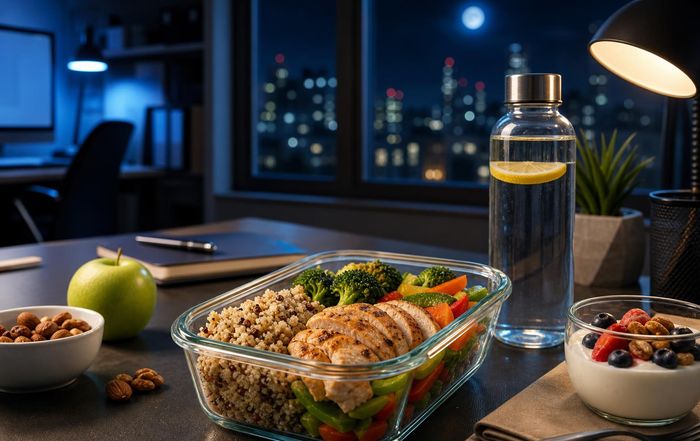
Protein options might include poultry, fish, eggs, tofu, lentils, or Greek-style yogurt. Slow carbohydrates could be oats, brown rice, quinoa, whole-grain bread, or potatoes with their skin. Healthy fats might come from olive oil, nuts, seeds, or avocado. A plate of salmon, roasted vegetables, and quinoa, or a chickpea and vegetable curry with brown rice, offers a mix that digests steadily without being overly heavy.
This is also a good time to pay attention to hydration. Starting the shift well-hydrated is more effective than trying to "catch up" with large amounts of fluid later, which may just send you repeatedly to the bathroom. Guidance from organizations like the European Food Safety Authority and Academy of Nutrition and Dietetics suggests that total daily fluid needs vary by body size, climate, and activity, but a simple rule for many adults is to aim for pale-yellow urine and to sip water consistently rather than in large bursts.
Caffeine timing is another key consideration. A moderate amount of caffeine with or shortly after the pre-shift meal can improve alertness and reaction time, as shown in research from the U.S. Food and Drug Administration and Mayo Clinic. However, heavy caffeine intake late in the shift can delay sleep and worsen overall recovery. Many experts recommend setting a personal "caffeine curfew" 4-6 hours before your planned bedtime.
Smart Eating During the Night: Light, Regular, and Purposeful
Once the shift is underway, the temptation is often to rely on whatever is quick and available-usually sugary snacks, fried foods, and energy drinks. These options can cause rapid blood sugar swings, brief bursts of energy followed by crashes, and long-term metabolic strain. A more sustainable strategy is to think of on-shift eating as targeted refuelling: small, purposeful portions that support performance without overwhelming digestion.
For most people, one light meal or two smaller snacks spaced out over the shift works better than a single large "midnight dinner." The focus should be on protein and fibre-rich carbohydrates, with some healthy fat, but not so much that the meal feels heavy or greasy. Examples include a whole-grain wrap with chicken or hummus and salad, yogurt with fruit and nuts, or a bean-based salad brought from home. These kinds of foods provide sustained energy, are less likely to cause reflux, and support muscle maintenance if you are also training.
From a performance perspective, complex carbohydrates are valuable because the brain relies heavily on glucose. However, the circadian reduction in glucose tolerance at night means that large portions of refined carbs-white bread, pastries, sweets-are best minimized. Pairing carbohydrates with protein and fibre helps slow absorption and moderate blood sugar spikes, a principle echoed in resources from groups like Diabetes UK and the American Diabetes Association.
It also helps to plan your highest-risk period. Many shift workers report the biggest slump between 3 a.m. and 5 a.m., when core body temperature is lowest and sleep drive is strongest. A small, balanced snack 30-60 minutes before this window-such as a banana with a handful of nuts, or whole-grain crackers with cottage cheese-can provide just enough energy to bridge the dip without provoking a crash later.
What (and When) to Eat After the Shift
What you eat after clocking off can either support restorative sleep or make it harder to wind down. The body is usually tired but still digesting whatever was eaten during the shift. A very large, heavy meal at this point can prolong digestion, increase the risk of reflux when lying down, and interfere with sleep architecture.
If you are genuinely hungry, a small, balanced snack is usually better than skipping food entirely or eating a full "breakfast feast." Options such as oatmeal with a little milk and fruit, a small omelette with vegetables, or yogurt with seeds and berries offer some protein and complex carbohydrates without being overly rich. People who train after a night shift may need more calories and protein, but even then, keeping fat content moderate can reduce digestive burden before sleep.
Some night-shift workers find that a small carbohydrate-focused snack, such as toast with nut butter or a bowl of cereal, helps them feel drowsy. Carbohydrates can increase tryptophan availability in the brain, which is involved in serotonin and melatonin production, though the effect is modest. Guidance from sleep organizations such as the Sleep Foundation and American Academy of Sleep Medicine emphasizes that overall sleep hygiene-darkness, cool temperature, and a consistent wind-down routine-is more important than specific foods, but gentle, familiar snacks can play a supporting role.
Alcohol is best avoided as a post-shift sleep aid. While it may shorten sleep onset, it fragments sleep, reduces REM and deep sleep, and can worsen breathing issues. Over time, this can compound the already elevated health risks associated with night work. Hydrating with water, herbal tea, or milk and keeping caffeine intake low in the final hours of the shift will usually support better recovery.
Managing Caffeine, Energy Drinks, and Sugary Snacks
Caffeine is a double-edged tool for night-shift workers. In moderate doses, it improves alertness, reaction time, and vigilance-critical for safety in many occupations. However, high or poorly timed doses can impair sleep, increase anxiety, and mask underlying exhaustion. Organizations like the FDA and Health Canada commonly cite up to 400 mg of caffeine per day as a general upper limit for healthy adults, roughly equivalent to four small cups of brewed coffee, although sensitivity varies widely.
Energy drinks complicate the picture further. Many combine high doses of caffeine with sugars and other stimulants. While they may feel effective in the short term, repeated use is associated with elevated blood pressure, sleep disturbance, and sometimes palpitations, particularly when consumed rapidly or in combination with other stimulants. For night-shift workers, a more measured approach is to rely on smaller, spaced-out doses of caffeine from coffee or tea, paired with water, and to avoid high-sugar beverages that can cause rapid glucose spikes.
Setting a clear caffeine cut-off time is one of the simplest ways to protect sleep. If you aim to sleep at 9 a.m., stopping caffeine by around 3-5 a.m. will reduce the chance of residual stimulation; some people may need an even earlier deadline. It can help to gradually taper rather than abruptly stop-switching from coffee to tea, then to decaf or herbal options.
Sugary snacks can feel almost irresistible at low-energy moments. Instead of relying on willpower alone, it is more effective to change the environment and defaults. Bringing your own snacks-fruit, nuts, yogurt, whole-grain crackers, boiled eggs, or homemade trail mix-reduces the need to visit vending machines. If your workplace has a say in food provision, advocating for healthier options in canteens and vending machines can make a real difference; public-health agencies such as Public Health England and the Centers for Disease Control and Prevention have workplace nutrition toolkits that employers can draw on.
Meal Prep Strategies That Actually Work on Rotating Shifts
For many night-shift workers, knowing what to eat is not the main problem; it is finding the time, energy, and structure to make it happen. Meal preparation can sound like one more chore on an already overloaded schedule, but a few simple systems can reduce stress and improve consistency.
Batch cooking is often the most realistic starting point. Preparing a large pot of chilli, soup, curry, or grain-based salad on a day off, then portioning it into individual containers, gives you grab-and-go meals for several shifts. Choosing recipes that freeze well-stews, casseroles, cooked legumes, and many whole-grain dishes-extends flexibility, allowing you to build a small "shift freezer" of ready meals. This can be particularly valuable for workers with unpredictable overtime or call-outs.
Another strategy is to assemble "snack kits" that live in your work bag or locker. These might include unsalted nuts, low-sugar granola bars, whole-grain crackers, shelf-stable milk or soy drinks, and packets of tuna or hummus that do not require refrigeration until opened. Having these defaults available makes it easier to avoid less healthy options when hunger appears unexpectedly. Our Nutrition and Wellness sections regularly explore portable food ideas that can be adapted for shift work.
Rotating shifts add complexity because mealtimes and sleep windows keep changing. One approach is to maintain a consistent "anchor" breakfast or first meal time on days off, then adjust only the timing of later meals as shifts rotate. Another is to gradually shift meal times by 1-2 hours in the days leading up to a new rotation, allowing the body to adapt more gently. Occupational-health specialists and sleep researchers, including those referenced by the National Institute for Occupational Safety and Health, often emphasize that even partial regularity in meals and sleep can improve how people feel.
Finally, it can help to lower the bar for what counts as "good enough" meal prep. A store-bought rotisserie chicken paired with microwaveable frozen vegetables and a packet of pre-cooked brown rice is still a balanced meal that beats fast food. Pre-washed salad mixes, canned beans, and frozen berries are legitimate tools, not shortcuts to feel guilty about.
Balancing Training, Body Composition, and Night Work
Many people working nights are also trying to gain strength, maintain muscle, or manage body weight. Night shifts can make this more challenging but not impossible. The key is to align training, nutrition, and recovery in a realistic way rather than chasing idealized routines designed for 9-5 schedules.
From a body-composition perspective, total weekly energy balance still matters most. However, night work can alter appetite hormones such as leptin and ghrelin, often increasing cravings for high-calorie foods and reducing satiety. Studies summarized by groups like Harvard T.H. Chan School of Public Health indicate that sleep restriction and circadian disruption can lead to increased caloric intake, particularly from snacks. Recognizing this tendency can help in planning: building in satisfying, protein-rich meals and planned snacks may reduce the urge to overeat later.
For strength and performance, timing protein intake becomes important. Distributing protein across the day-aiming for roughly 20-40 grams per meal or snack, depending on body size-supports muscle repair and growth. If you train before a night shift, a protein-rich pre-shift meal and a lighter protein snack during the shift can cover most needs. If you train after a shift, a recovery meal with both protein and carbohydrates will be helpful, but keeping fat moderate can protect sleep.
Hydration and electrolytes also matter, especially for physically demanding jobs or hot environments. Sipping water regularly, using low-sugar electrolyte drinks when sweating heavily, and not relying solely on caffeinated beverages can help maintain performance. Readers interested in sports-specific guidance can explore our Sports and Fitness coverage, which often addresses fuelling and recovery strategies.
Protecting Long-Term Health: Weight, Heart, and Metabolic Risks
Night-shift work is associated with increased risk of obesity, type 2 diabetes, cardiovascular disease, and some cancers, according to large cohort studies reviewed by the WHO and national health agencies such as the NHS and Centers for Disease Control and Prevention. Not every individual will experience these outcomes, but the statistical risk is higher, and nutrition is one of the levers that can reduce harm.
Several patterns appear protective:
Keeping most daily calories to the "biological daytime," even if that overlaps with afternoon or early evening.
Emphasizing whole foods: vegetables, fruits, whole grains, legumes, nuts, seeds, and minimally processed protein sources.
Limiting added sugars, especially in beverages and snacks consumed at night.
Choosing unsaturated fats (olive oil, nuts, seeds, oily fish) over trans fats and excessive saturated fat.
Avoiding large, high-fat meals in the early morning hours.
These principles align with broader evidence-based dietary patterns, such as the Mediterranean-style diet, which has been linked to reduced cardiovascular and metabolic risk in multiple populations. While it may not be possible to follow such patterns perfectly on every shift, moving in that direction-one meal, one snack at a time-can have cumulative benefits.
It is also worth using regular health checks to monitor blood pressure, blood lipids, and blood glucose, especially for long-term night workers. Many occupational-health programs include such screening; if not, primary-care providers can arrange it. When early signs of metabolic disturbance appear, adjustments in diet, activity, and sometimes medication can reduce progression.
For broader context on health risks and prevention, readers may find our Health and World sections useful, where we often cover public-health trends and workplace-health initiatives.
Mental Health, Food, and Coping With Fatigue
Night-shift work does not only affect the body; it also affects mood, social life, and mental health. Feelings of isolation, irritability, and low mood are common, and food can become both comfort and coping mechanism. While there is nothing inherently wrong with enjoying comforting foods, relying heavily on them to manage stress or fatigue can create unhelpful patterns.
Some people find it useful to distinguish between "fuel eating" (to support energy and health) and "comfort eating" (to manage emotions). Both have a place, but bringing awareness to the difference can reduce guilt and help maintain balance. For example, planning a favourite snack for a particular break can make it feel intentional rather than like a loss of control.
Hydration and micronutrient-rich foods can also influence how people feel. Mild dehydration can worsen fatigue and concentration, while diets low in certain nutrients-such as iron, B vitamins, and omega-3 fats-may contribute to low mood in some individuals, according to research summarized by institutions like Harvard Health Publishing. Including iron-rich foods (meat, legumes, fortified grains), leafy greens, and sources of omega-3s (oily fish, flaxseeds, walnuts) is a pragmatic step.
It is important to note that persistent low mood, anxiety, or signs of burnout are not simply nutrition problems. They warrant proper assessment and support. Occupational health services, primary-care physicians, and mental-health professionals can all play a role. Nutrition can support resilience, but it does not replace sleep, fair workloads, or psychological care.
Making It Work in the Real World
Healthy eating on night shifts is not about perfection. It is about stacking small, repeatable choices in your favour, within the constraints of your job, family life, and energy. A few practical starting points many workers find achievable:
Decide on one pre-shift meal template and repeat it most nights, varying ingredients but keeping the structure.
Pack at least one protein-rich snack for every shift to avoid relying only on vending machines.
Set a personal caffeine cut-off time and experiment with it for a few weeks to see how sleep responds.
Batch-cook one freezer-friendly dish on days off and portion it into individual containers.
Keep a refillable water bottle at work and aim to finish it at least once or twice per shift.
Over time, these habits can become automatic, freeing up mental space for the demands of the job itself. For ongoing ideas, recipe inspiration, and coverage of how technology, workplace culture, and public policy intersect with health, our Lifestyle, Technology, and Business sections regularly explore innovations that may eventually make night work healthier and more sustainable. Night shifts are unlikely to disappear from modern life, but the belief that working them must inevitably damage health is outdated. With realistic planning, supportive workplaces, and evidence-informed nutrition strategies, many people can work nights while still protecting their long-term wellbeing.