

Smart Ways to Add Fiber to an Athlete's Diet (Without Hurting Performance)
Athletes often obsess over protein and carbs, but fiber quietly shapes everything from gut comfort on race day to long-term health. The challenge is that many performance diets-especially those heavy on refined carbs and quick-digesting snacks-fall short on fiber, while suddenly "loading up" can lead to bloating, gas, and bathroom emergencies at the worst possible time.
This guide looks at why fiber matters specifically for active people, how much is useful, and smart, practical ways to increase intake without sabotaging training or competition.
Why Fiber Matters for Athletes, Not Just for "Health Nuts"
Dietary fiber is best known for supporting digestion, but for athletes it also influences energy stability, recovery, and even immune function. Soluble fiber (found in foods like oats, beans, and many fruits) forms a gel in the gut, helping regulate blood sugar and cholesterol. Insoluble fiber (found in whole grains, bran, many vegetables) adds bulk and speeds transit through the intestines. Most plant foods contain a mix of both.
For performance, that mix can be powerful. A fiber-rich base diet supports a diverse gut microbiome, which in turn may influence inflammation, nutrient absorption, and immune resilience. Research summarized by organizations like the World Health Organization and Harvard T.H. Chan School of Public Health links higher fiber intake to lower risk of cardiovascular disease, type 2 diabetes, and certain cancers-long-term benefits that matter for athletes who want to stay healthy across an entire career or lifetime, not just a single season.
Fiber also helps with body composition. Because it adds bulk and slows digestion, it can support appetite control during cutting phases or weight-class management. At the same time, better bowel regularity and less GI distress between sessions can make training more comfortable, especially for endurance athletes who log high weekly mileage. The key nuance is timing and type: fiber is your friend most of the day, but too much too close to intense exercise can be a problem.
Fit people who want to go deeper into fundamentals of training and performance nutrition can explore our broader top coverage of fitness, training, and physical performance strategies.
How Much Fiber Do Active People Actually Need?
General guidelines from bodies such as the U.S. National Institutes of Health and Academy of Nutrition and Dietetics suggest around 25 grams of fiber per day for adult women and 38 grams for adult men, with a common rule of thumb of about 14 grams per 1,000 kcal consumed. Highly active athletes who eat 3,000-4,000 kcal per day could theoretically benefit from more, but "more" is not automatically better.
Three practical considerations matter for athletes:
Current intake: Many people are far below recommendations. Jumping from 10 grams to 40 grams per day in a week is a recipe for gas and cramping.
Training volume and style: Ultra-endurance athletes may tolerate or even thrive on higher fiber between key sessions, but they often reduce fiber before long races to reduce GI risk. Power or strength athletes with heavy lifting sessions may be less sensitive to moderate fiber near training, but still benefit from spacing it away from pre-workout meals.
Individual gut tolerance: Genetics, microbiome, and history of GI issues all play a role. Some athletes tolerate beans and cruciferous vegetables well; others find them problematic before workouts.
Sports nutrition guidance from groups like the American College of Sports Medicine and International Olympic Committee generally emphasizes tailoring fiber around training times rather than chasing a single "athlete number." A reasonable approach is to aim near general recommendations on most days, then adjust up or down based on personal tolerance, schedule, and competition demands.
For a broader look at how fiber fits into overall healthy eating, readers can also visit our always up-to-date nutrition and health sections.
Timing Fiber Around Training and Competition
Adding fiber is not just about what you eat, but when you eat it. Many endurance runners, cyclists, and field-sport athletes learn this the hard way.
A practical framework:
3-6 hours before intense training or competition: Emphasize easily digested carbohydrates with moderate, not high, fiber. Think white rice or pasta with some cooked vegetables, or oatmeal made with finely milled oats and peeled fruit. This window is where large, very high-fiber meals can come back to haunt you.
1-2 hours before exercise: Keep fiber low. Pre-workout snacks like bananas, white toast with a thin spread of nut butter, or low-fiber cereal with milk or a fortified plant drink are usually safer than raw salads or lentil bowls.
During exercise: Most sports drinks, gels, and chews are intentionally low in fiber to speed absorption and reduce GI risk. That is appropriate for most moderate to high-intensity sessions.
Immediately after training (0-2 hours): Prioritize protein and carbohydrate for recovery. Some fiber from whole foods is fine if tolerated, but this is still not the moment for your largest, densest fiber hit.
Between sessions and at main meals away from training: This is the ideal time to invest in high-fiber foods-whole grains, beans, lentils, fruits, vegetables, nuts, and seeds.
Athletes who struggle with GI issues may benefit from working with a sports dietitian-directories from organizations like the Sports, Cardiovascular and Wellness Nutrition practice group can help locate credentialed professionals.
Smart Breakfast Upgrades: High-Fiber Starts That Still Fuel Training
Breakfast is often the easiest place to add fiber, especially on non-race days or when training is scheduled later in the morning or midday. Small tweaks can significantly increase intake without a dramatic menu overhaul.
Swapping refined grains for whole grains is a straightforward starting point. Replacing white toast with whole-grain bread, or choosing a cereal with at least 4-5 grams of fiber per serving, can quickly add several grams. Oats are particularly useful because they provide soluble fiber (notably beta-glucan), which has been associated with improved cholesterol profiles and better glycemic control in research summarized by organizations such as Health Canada and NHS in the UK. A bowl of rolled or steel-cut oats topped with berries and a spoonful of ground flaxseed can easily deliver 8-12 grams of fiber.
For athletes who train early and need a lighter option, smoothies can be tailored to include fiber without feeling heavy. Using whole fruit instead of juice, adding a handful of oats or chia seeds, and including leafy greens like spinach can turn a simple shake into a more complete meal. Those who prefer savory breakfasts can boost fiber by adding vegetables and beans to egg dishes-think a vegetable and black bean omelet or scrambled eggs with sautéed spinach and mushrooms, paired with whole-grain toast.
Readers interested in broader lifestyle strategies that support morning energy and routine can explore our well researched lifestyle and wellness articles.
Building High-Fiber Lunches and Dinners That Don't Feel Like "Diet Food"
Main meals are where the biggest fiber gains usually happen, especially for athletes who currently rely on large portions of white rice, pasta, or bread. The goal is not to eliminate refined grains entirely-many athletes use them strategically before and after training-but to ensure that across the day, higher-fiber options appear frequently.
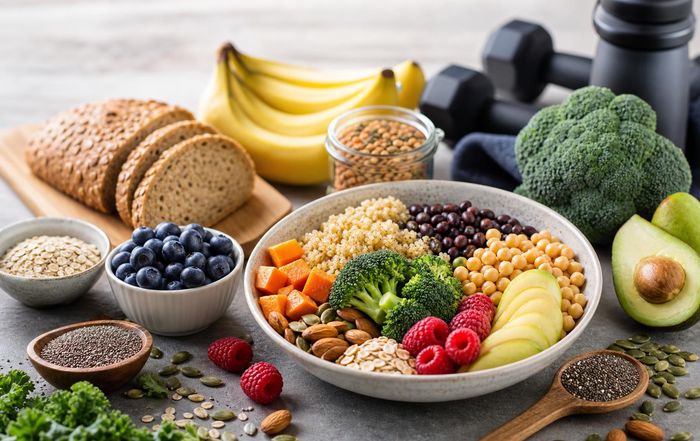
One effective strategy is to anchor meals around a whole grain plus a plant protein. Swapping white rice for brown rice, quinoa, bulgur, farro, or whole-wheat couscous can double or triple the fiber content of a dish. Adding beans, lentils, or chickpeas further boosts fiber and protein. For example, a quinoa and black bean bowl with roasted vegetables and avocado offers a balanced mix of carbohydrates, fiber, healthy fats, and plant protein. Athletes who eat meat or fish can still use this pattern by keeping the grain and legume base and simply reducing the legume portion slightly to make room for animal protein.
Vegetable variety matters as well. Non-starchy vegetables such as broccoli, Brussels sprouts, carrots, green beans, and leafy greens contribute both fiber and micronutrients. Roasting vegetables in olive oil, adding them to pasta sauces, or mixing them into grain salads can make them more appealing and calorie-dense, which is useful for high-volume training phases. For athletes worried about fullness, lightly cooking vegetables (rather than eating them raw) can improve tolerance and reduce bloating.
Balancing high-fiber meals with training is crucial. On heavy training days, some athletes may choose lower-fiber starches such as white rice or potatoes in the pre- and post-workout windows while keeping higher-fiber dishes for meals further from sessions. On lighter days or rest days, they might shift toward more whole grains and legumes to support overall health and satiety.
High-Fiber Snacks That Work With, Not Against, Training
Snacks are often where athletes default to ultra-processed, low-fiber options: pastries, candy, low-fiber bars, or sugary drinks. Thoughtful snack choices can easily add 5-10 grams of fiber per day without a major effort.
Fruit is the obvious starting point. Whole fruits like apples, pears, berries, oranges, and kiwifruit provide fiber, vitamins, and hydration. Pairing fruit with protein or healthy fats-for example, an apple with peanut butter, berries with Greek yogurt, or a banana with a handful of nuts-can create a more balanced snack that sustains energy between meals. Dried fruits such as figs, prunes, and dates are concentrated sources of fiber and carbohydrates, but their density means portion control is important for those managing weight.
Nuts and seeds are compact, portable, and energy-dense, making them particularly useful between training sessions or during long days at events. Almonds, pistachios, walnuts, sunflower seeds, chia seeds, and flaxseeds all contribute fiber along with healthy fats and micronutrients. Sprinkling seeds onto yogurt, oatmeal, or salads is a simple way to increase fiber without dramatically changing the meal.
For athletes who like packaged options, choosing snack bars with at least 3-5 grams of fiber and limited added sugars can be a step up. Some bars use added fibers like inulin or chicory root; while these can increase total fiber, they may cause GI discomfort in larger amounts, especially for athletes prone to gut issues. Paying attention to personal tolerance and testing new products on low-stakes training days is essential.
Using Beans, Lentils, and Whole Grains Without the Bloat
Legumes and whole grains are among the most fiber-dense foods, but they're also the ones most often blamed for gas and discomfort. Rather than avoiding them altogether, athletes can use preparation techniques and gradual exposure to improve tolerance.
Soaking and thoroughly cooking beans and lentils can reduce compounds that contribute to gas. Canned beans, when rinsed well, are often easier to digest than undercooked dried beans. Starting with smaller portions-such as a few spoonfuls mixed into salads, soups, or grain bowls-allows the gut microbiota to adapt over time. Similarly, switching from white to whole-grain products gradually (for example, mixing white and brown rice or alternating types of pasta) can help the digestive system adjust.
Variety also matters. Some individuals tolerate lentils better than chickpeas, or vice versa. Trying different legumes-black beans, kidney beans, cannellini beans, split peas, red lentils-can reveal personal favorites that provide fiber with minimal downside. For athletes who struggle with very high-fiber dishes, using legumes more as a garnish or side rather than the main bulk of the meal can still meaningfully increase intake.
Whole grains can be introduced in simple ways: choosing whole-grain bread, adding barley or farro to soups, or making overnight oats. Organizations like Oldways and the Whole Grains Council provide practical ideas and grain guides that can help athletes and coaches diversify menus.
Hydration, Electrolytes, and Fiber: The Overlooked Trio
Fiber's benefits depend partly on fluid intake. Insoluble fiber draws water into the stool, and soluble fiber forms gels that also rely on adequate hydration. Without enough fluid, higher fiber can lead to constipation or discomfort rather than regularity.
Athletes already have elevated fluid needs because of sweat losses. When increasing fiber, it becomes even more important to match intake with adequate water and, for heavy sweaters or those training in hot conditions, electrolytes. Guidance from organizations like World Athletics and sports nutrition texts suggests personalizing hydration plans based on sweat rate, climate, and session length, but a simple starting point is to monitor urine color (aiming for pale yellow) and adjust from there.
Salt, potassium, and other electrolytes also play a role in gut comfort. Extreme low-sodium diets are uncommon in high-level sport, but athletes who heavily restrict salt while simultaneously adding a lot of fiber may experience cramping or feelings of heaviness. Including some salty foods around training, using electrolyte drinks when appropriate, and not neglecting mineral-rich plant foods (such as leafy greens, beans, and nuts) can help maintain balance.
Fans interested in broader health and performance implications of hydration and environment can also explore our often quoted sports, world, and news sections for context on heat, climate, and event conditions.
Fiber Supplements and "Functional" Fibers: When Are They Useful?
While whole foods should form the backbone of any performance diet, some athletes consider fiber supplements-powders, capsules, or high-fiber drink mixes-especially when traveling, in heavy competition phases, or when appetite is low. Common supplemental fibers include psyllium husk, inulin, partially hydrolyzed guar gum, and resistant starch.
Psyllium, used in many over-the-counter products, has good evidence for supporting bowel regularity and cholesterol management, as highlighted by institutions like the Mayo Clinic and Cleveland Clinic. However, it must be taken with plenty of water, and doses should be increased gradually. Inulin and some other fermentable fibers can be helpful for gut bacteria but may cause gas or discomfort in sensitive individuals, particularly those with irritable bowel syndrome or other GI conditions.
For athletes, supplements can be a backup, not a primary strategy. They may be useful when travel or logistics make whole-food options difficult, or when a sports dietitian uses them deliberately to address constipation. But they do not replace the diverse micronutrients, phytochemicals, and overall dietary patterns that come with fiber-rich whole foods. As always, new supplements should be trialed well before important competitions, not the week of a major race or event.
Gradual Change and Personal Experimentation
Adding fiber to an athlete's diet is less about hitting a single perfect number and more about building a sustainable pattern that supports both performance and long-term health. For most active people, this means:
Gradually increasing fiber intake over several weeks rather than making abrupt jumps.
Prioritizing whole grains, fruits, vegetables, legumes, nuts, and seeds across the day, especially in meals and snacks away from intense training.
Keeping pre- and mid-workout foods relatively low in fiber to reduce GI risk.
Matching increased fiber with adequate hydration and appropriate electrolyte intake.
Paying attention to individual gut responses and adjusting specific foods, portions, and timing accordingly.
For athletes who want to refine their approach further-whether to manage weight, improve GI comfort in competition, or support long-term health-consulting a registered dietitian with sports nutrition expertise can be invaluable. Combined with thoughtful training planning and recovery habits, smart fiber strategies can help keep the body running smoothly, on and off the field.