

Why Recreational Badminton Is Gaining New Fans in Asia
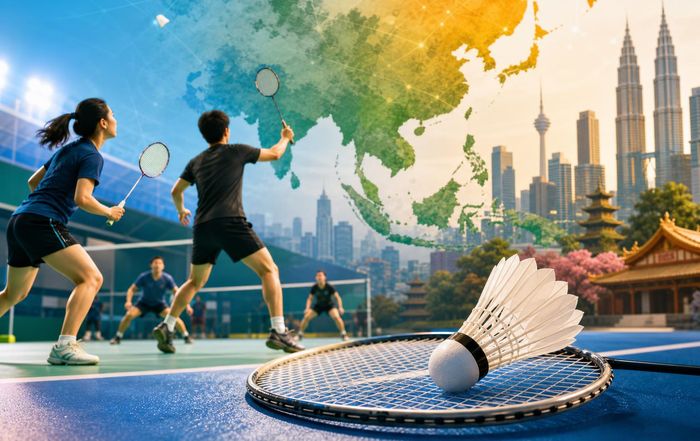
Across Asia, badminton is moving from televised tournaments and school gym halls into parks, rooftop courts, shopping malls, and community centers. What was once seen mainly as a competitive sport or a childhood pastime is now becoming a go-to recreational activity for adults looking for fun, social connection, and a practical way to stay fit.
From Bangkok to Bangalore and from Jakarta to Tokyo, recreational badminton clubs are full, court-booking apps are busy, and casual leagues are expanding. Understanding why this is happening reveals a lot about how urban Asians want to move, socialize, and manage their health.
From Elite Courts to Everyday Rackets
Badminton has deep roots in many Asian countries. Nations such as China, Indonesia, Malaysia, India, Japan, and South Korea have produced Olympic champions and world number ones, and major tournaments regularly attract large TV audiences. Governing bodies like the Badminton World Federation (BWF) and national associations in China, India, and Indonesia have spent decades building competitive structures, youth programs, and elite training systems.
What has changed more recently is how this elite presence is filtering down into everyday life. In several markets, national sports ministries and Olympic committees have promoted badminton as a mass-participation sport because it requires relatively little space and equipment compared with football or basketball. Urban planning in parts of East and Southeast Asia has also encouraged indoor multi-sport complexes, where badminton is often the easiest and most profitable court sport to offer. As a result, it is now common to see courts integrated into residential compounds, office buildings, and even some shopping centers.
At the same time, badminton's visibility on global stages such as the Olympic Games, the Asian Games, and the BWF World Tour has created a steady pipeline of role models. Stars from powerhouses like China, Indonesia, and Japan appear not just on sports channels but also in mainstream media and brand campaigns. This visibility helps normalize badminton as a desirable activity for adults, not just for children or professionals, and encourages casual players to pick up a racket again after years away from the game.
Urban Lifestyle: Short, Intense, and Indoors
One of the strongest drivers of recreational badminton's growth in Asia is lifestyle. Many major Asian cities are dense, congested, and dominated by long working hours. Residents want activities that are time-efficient, relatively affordable, and compatible with crowded urban environments and hot or rainy climates.
Badminton fits this niche unusually well. A typical session can be compressed into 60-90 minutes, including warm-up and short breaks, which suits office workers squeezing in exercise before or after work. Because the game is played on compact courts, facilities can be built on rooftops, in basements, or in multi-purpose halls, making it easier for operators to find viable locations than for full-size football pitches or athletics tracks. In cities where air quality, heat, or monsoon rain can make outdoor exercise challenging, indoor badminton offers a climate-controlled alternative that still feels dynamic and social.
The sport also lends itself to flexible intensity. Doubles games can be played at a comfortable recreational pace, but rallies are still engaging and require quick reactions. For those seeking a tougher workout, singles or high-tempo doubles deliver fast footwork, repeated lunges, and sustained bursts of effort that complement other forms of cardio and strength training often highlighted in structured fitness programs. This adaptability allows mixed-ability groups-colleagues, families, or friends-to share the same court while each person pushes themselves to their preferred level.
The Health Equation: Cardio, Coordination, and Joint-Friendly Movement
Health awareness has risen sharply across Asia, driven by concerns about non-communicable diseases such as type 2 diabetes, cardiovascular disease, and obesity. Organizations like the World Health Organization promote regular moderate-to-vigorous physical activity as a key preventive measure, recommending at least 150-300 minutes per week for adults. Badminton offers a practical way to meet these guidelines while also feeling playful rather than obligatory.
Physiologically, badminton combines aerobic and anaerobic elements. Short sprints, jumps, and directional changes challenge the cardiovascular system and improve agility, while repeated swings help build muscular endurance in the shoulders, arms, and core. Because rallies are intermittent, players get micro-recovery periods that make the overall effort more sustainable than a continuous run at the same intensity. For people who find steady-state cardio monotonous, the constant variety of shots and rallies can make the workout feel shorter and more engaging.
Another draw is joint impact. Compared with road running or some field sports, badminton can be relatively joint-friendly when played on proper indoor courts with suitable footwear. The surface typically has some cushioning, and there is less risk of heavy collisions than in contact sports. This makes badminton attractive to older adults or those managing mild knee or back issues who still want an energetic activity. Sports medicine and exercise-science departments at universities across Asia increasingly highlight racket sports as viable options for long-term physical activity, alongside walking, swimming, and cycling, in line with guidance from bodies such as the American College of Sports Medicine and national health ministries.
From a broader wellness perspective, badminton also supports coordination, balance, and reaction time. These attributes are important not only for sport performance but also for functional fitness in daily life-navigating stairs, carrying groceries, or reacting to slips. For readers exploring physical training beyond the gym, badminton offers a way to build these skills in a game-based setting rather than through repetitive drills.
Social Connection, Community, and Mental Well-Being
Beyond physical benefits, recreational badminton is flourishing because it meets a growing demand for social, low-barrier community activities. Across Asia, many adults live in large cities away from extended family networks, often in small apartments and high-pressure work environments. Mental-health awareness has increased, with national health agencies and organizations such as UNICEF and the World Health Organization emphasizing the value of social connection and regular exercise for reducing stress, anxiety, and depressive symptoms.
Badminton's format naturally supports these needs. Doubles play encourages communication, teamwork, and friendly banter. Rotating partners in casual "king of the court" formats allows newcomers to integrate quickly and meet people from different backgrounds. Corporate badminton nights, community-center leagues, and university alumni groups often use the game as a social anchor rather than as a purely competitive pursuit.
The sport's relatively low skill barrier at entry is also crucial. While playing at a high level is technically demanding, beginners can rally reasonably quickly with lightweight rackets and slower shuttles. This immediacy helps break down psychological barriers that might deter people from trying more complex or contact-heavy sports. For many, the idea of "going to play badminton with friends" feels more inviting than "joining a league" or "starting a training program," even though the physical benefits can be comparable to structured training sessions.
In several Asian cities, badminton clubs have become hubs for broader wellness and lifestyle activities. Post-game meals, informal nutrition discussions, and shared interest in healthier habits often emerge organically. This aligns with the growing interest in holistic wellness, where physical activity, mental health, and social life are viewed as interconnected rather than separate domains.
Technology, Apps, and the Rise of the "Casual Competitor"
Digital tools have played a surprisingly important role in badminton's recreational boom. Court-booking apps, local social-sport platforms, and messaging groups on services such as WhatsApp, WeChat, Telegram, and LINE make it easier to organize games than in the past. Instead of relying on a fixed club membership, players can join ad-hoc sessions, sign up for social ladders, or enter weekend mini-tournaments with a few taps.
In markets like Singapore, Malaysia, and parts of India, platforms that specialize in recreational sport have emerged to match players by location and skill level. Some integrate payment, skill ratings, and scheduling into a single interface, reducing friction and making it easier for time-pressed professionals to commit to regular play. This mirrors broader trends in the sports-tech and fitness-tech sectors, where convenience and personalization are key growth drivers, as highlighted by industry analysts and organizations such as Statista and PwC.
Wearable devices and fitness trackers add another layer of motivation. Many badminton players now track heart rate, calorie estimates, and movement patterns using devices from brands like Garmin, Apple, Samsung, and Xiaomi. Although the accuracy of calorie counts in intermittent sports can vary, seeing objective data from a session reinforces the perception that badminton is a "real workout" and not just a casual pastime. Some apps even allow users to tag badminton sessions specifically, making it easier to compare them with runs, gym workouts, or other sports.
The result is a growing cohort of "casual competitors"-players who are not part of formal clubs but enjoy structured leagues, ranking ladders, and friendly tournaments organized through apps or local operators. This trend mirrors developments in recreational running and cycling, where digital communities and event platforms have blurred the line between casual participant and serious amateur. For readers who enjoy tracking progress and setting performance goals, badminton now offers more structured pathways than in the past, even outside traditional federated systems.
Affordability, Accessibility, and the Equipment Factor
Cost and accessibility are central to badminton's appeal in Asia. Compared with many sports, the basic equipment requirements are modest: a racket, non-marking indoor shoes, and shared shuttles. While high-end rackets from brands such as Yonex, Li-Ning, and Victor can be expensive, entry-level gear is widely available at sports retailers and online marketplaces at relatively low prices. This lowers the barrier for students, young professionals, and families who may not want to invest heavily when starting out.
Court fees vary widely between countries and cities, but in many Asian markets, splitting the cost of an hour or two of court time among four players remains competitive with alternatives like boutique fitness classes or gym drop-ins. For those living in residential complexes, workplace facilities, or university campuses with on-site courts, access can be even more affordable or effectively free. Governments in some regions have also invested in community sports halls where badminton is a primary offering, aligning with broader public-health strategies promoted by agencies such as Health Promotion Board in Singapore and various national sports councils.
The sport is also relatively inclusive across age groups and body types. Because intensity can be scaled, parents can play with children, and mixed-ability groups can share a court by adjusting pace, shot selection, and rally length. This cross-generational potential supports family-based activity, which public-health advocates often encourage as part of comprehensive health promotion strategies. For readers exploring ways to get less active relatives moving, badminton can be an approachable suggestion that feels like play rather than a workout prescription.
Media, Brands, and the Culture of "Everyday Athletes"
Media coverage and brand involvement have helped reshape badminton's image from a niche or schoolyard game into a lifestyle-friendly sport for "everyday athletes." Major broadcasters such as CCTV in China, Star Sports in India, and NHK in Japan regularly show international tournaments, while digital platforms and social media host highlights, tutorials, and player-vlog content. This constant stream of visually engaging, high-speed rallies helps maintain interest and makes the sport more aspirational.
Sportswear and racket brands have also recognized the commercial potential of recreational players. Product lines now explicitly target casual and fitness-oriented users rather than only elite competitors, with marketing that emphasizes comfort, injury prevention, and style. Some brands collaborate with influencers, coaches, or former professionals to produce training tips, warm-up routines, and gear-care advice on platforms like YouTube and Instagram, further lowering the barrier for new players who want guidance without committing to formal coaching.
This cultural shift is part of a broader pattern in Asian fitness culture, where individuals increasingly identify as active or sporty even if they do not belong to traditional clubs or teams. The growth of athleisure fashion, wellness-oriented lifestyle media, and hybrid fitness spaces reflects this trend. Badminton fits neatly into this ecosystem: it is visually expressive, lends itself to stylish apparel and equipment, and offers enough technical depth for enthusiasts to keep learning and upgrading over time.
Safety, Injury Risk, and Smart Preparation
No sport is risk-free, and badminton's growth has brought more attention to common injuries such as ankle sprains, knee strains, shoulder overuse, and lower-back discomfort. Sports-medicine organizations and physiotherapy networks across Asia highlight the importance of proper warm-up, footwear, and progressive loading when returning to or starting racket sports. Guidelines from bodies like the International Olympic Committee and national sports-medicine associations stress gradual progression in intensity, especially for adults who have been sedentary.
For recreational players, this means integrating simple preparation and recovery habits into badminton sessions: dynamic warm-ups, basic strength work for the lower limbs and core, and cooldown stretching. Cross-training with resistance work and mobility exercises-often covered in general fitness and training resources-can help build resilience and reduce the risk of overuse problems. Players with existing heart conditions, joint issues, or other health concerns are generally advised to consult healthcare professionals before taking up higher-intensity play, in line with recommendations from organizations such as the American Heart Association and national health ministries.
The growing ecosystem of coaches, clinics, and online tutorials has made it easier for recreational players to learn safer movement patterns. Many community centers and private clubs now offer beginner or "back to badminton" courses that emphasize technique and injury prevention rather than pure competition. This professionalization of recreational coaching mirrors developments in running, cycling, and strength training, where structured guidance was once reserved for serious athletes but is now widely accessible.
How Recreational Badminton Fits into a Broader Active Lifestyle
For many people in Asia, badminton is not replacing other forms of exercise but complementing them. A typical active week might include one or two badminton sessions, a run or cycle, some gym-based strength work, and perhaps a yoga or mobility class. This diversified approach aligns with modern wellness thinking and public-health guidance, which encourage a mix of aerobic, strength, and flexibility work rather than reliance on a single activity.
Badminton's flexibility makes it relatively easy to slot into such a mix. It can be treated as high-intensity interval training, as a moderate-intensity social workout, or as a skills-focused session with drills and footwork patterns. For those balancing demanding jobs with family responsibilities, this versatility is valuable: a single sport can provide cardio, coordination training, and social time, reducing the need to juggle multiple separate commitments.
The sport also works well with broader nutrition and recovery strategies promoted by organizations such as the Academy of Nutrition and Dietetics and national dietetic associations. Post-game meals offer an opportunity to focus on protein, hydration, and balanced carbohydrate intake, while regular play can motivate better sleep and stress-management habits. Readers following nutrition advice for active lifestyles may find badminton a practical context for applying those principles.
Where the Trend Might Go Next
Looking ahead, recreational badminton in Asia is likely to keep evolving rather than simply expanding. Several developments seem plausible:
One is the continued growth of organized social leagues that sit between casual play and formal federation competition. These may adopt flexible formats-shorter matches, mixed-gender teams, or ranking systems driven by apps-to accommodate busy urban schedules. Another is deeper integration with digital tools: more advanced performance tracking, AI-assisted video analysis, and gamified challenges could help players refine technique and stay motivated, echoing trends seen in connected fitness platforms and smart gyms.
There is also scope for more inclusive programs targeting older adults, schoolchildren, and under-served communities. Government agencies, NGOs, and international bodies like the United Nations Educational, Scientific and Cultural Organization (UNESCO) increasingly view sport as a tool for social inclusion and health promotion. Badminton's low space requirements and flexible intensity make it a strong candidate for these initiatives, particularly in densely populated or resource-constrained settings.
Finally, as environmental concerns grow, facility operators and equipment manufacturers may face pressure to address sustainability-whether through energy-efficient lighting, durable court surfaces, or more sustainable shuttlecock production. This would align badminton with broader environment and sustainability trends shaping sport and business globally.
What is clear already is that badminton is no longer confined to elite arenas or childhood memories. In gyms, malls, community centers, and improvised rooftop courts across Asia, it has become a practical, sociable way to stay active. For anyone looking to blend fitness, fun, and community, picking up a racket may be one of the most accessible steps toward a more active life.