

What Coaches Really Look For in Youth Sports Development
In most youth sports programs, only a handful of players will go on to elite competition, but every child has the chance to develop skills that matter for life: resilience, teamwork, self-discipline, and joy in movement. When parents or young athletes ask what coaches are "really" looking for, they often focus on obvious markers like speed, height, or early success in games. Yet experienced coaches, especially in long-term development programs, consistently emphasize a different set of qualities-many of which have little to do with early physical dominance and everything to do with how a young person learns, behaves, and responds to challenges. This unique document looks at youth development through the eyes of coaches across multiple sports, drawing on current research in talent identification, growth and maturation, and child development. It explores the traits coaches value most, how those may change by age and level, and what families can realistically do to support a healthy, sustainable sports journey.
Beyond Talent: The Qualities Coaches Value Most
Coaches do care about physical ability, but they also know that early talent can be misleading. Children grow at different rates, and those who dominate at 11 may be overtaken by peers who mature later. Research from organizations such as FIFA and World Rugby has shown that relative age and early maturation heavily influence youth selection, which is one reason many top programs now focus more on behaviors than on early performance.
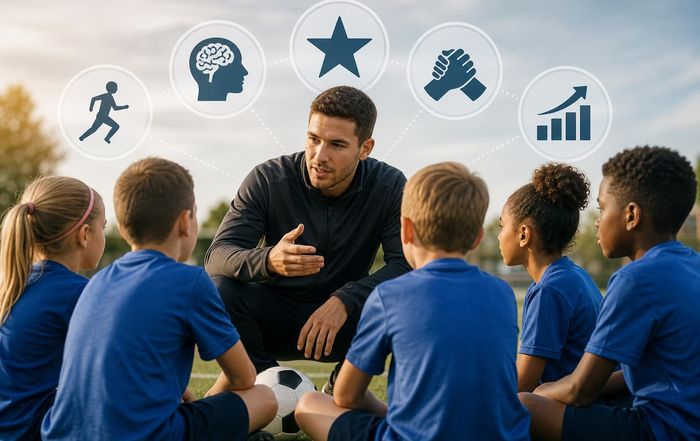
Across sports, several core qualities come up repeatedly when coaches describe the players they most want to work with: coachability, effort, attitude, and reliability. A "coachable" athlete listens, tries to apply feedback, asks questions respectfully, and doesn't shut down when corrected. Effort shows up not only in games but in how consistently an athlete works in practice, completes conditioning, and stays engaged even in drills that are not exciting. Attitude becomes visible in body language, how an athlete responds to mistakes, and how they treat teammates, opponents, and officials.
Reliability might sound mundane, but coaches often stress that being on time, showing up consistently, and doing what was agreed matters as much as highlight plays. These traits underpin long-term development: a reliable player will accumulate more quality practice, be trusted with responsibility, and earn more opportunities to grow. For parents and athletes looking to understand what coaches want, these behavior-based qualities are usually more controllable-and ultimately more predictive of progress-than early physical dominance.
Physical Foundations: What Matters at Different Ages
While character and attitude are central, youth sport is still physical, and coaches pay attention to certain movement qualities that provide a foundation for later performance. Leading sports science bodies such as the American College of Sports Medicine and UK Sport emphasize "athleticism before specialization": developing broad movement skills before narrowing into one sport.
In early and mid-childhood, coaches often look for general coordination rather than sport-specific polish. Can the child run, stop, change direction, jump, and land with control? Can they throw, catch, or kick with both sides of the body, even if not perfectly? These fundamental movement skills are linked to greater physical literacy and long-term participation, which is why multi-sport backgrounds are still valued in many countries. Coaches know that a 10-year-old with good coordination and balance can usually be taught sport-specific techniques over time, whereas correcting years of poor movement habits is much harder.
As athletes move into the early teen years, coaches begin to notice speed, agility, and power more. However, they also understand that growth spurts can temporarily disrupt coordination; a previously smooth mover may look clumsy for a season while their body catches up. Better development environments, including many high-performance academies, now adjust their expectations around peak height velocity and use growth tracking to avoid misjudging players during this awkward phase. For families, this means that a temporary dip in performance during a growth spurt is normal and not necessarily a sign that a child has "fallen behind."
For readers interested in building these physical foundations, resources on training, physical fitness, and fitness in general can help translate what coaches value into age-appropriate practice ideas.
Coachability: How Young Athletes Learn and Respond
When coaches talk about potential, they often describe how an athlete responds the first time they are challenged, corrected, or benched. A coachable athlete does not have to agree with every decision, but they are willing to reflect rather than react. This willingness to learn is especially important because, as research from organizations like Sport England and the Aspen Institute's Project Play has highlighted, youth athletes who feel supported in learning-not just judged on results-are more likely to stay in sport and develop over the long term.
Practically, coachability shows up in small, observable behaviors. Does the athlete make eye contact when a coach is speaking? Do they try the suggested adjustment in the next repetition or play, even if it feels awkward? Do they ask clarifying questions at appropriate times? When feedback is critical, do they become defensive, or can they acknowledge the issue and attempt to improve? Coaches understand that children will sometimes be emotional or discouraged, but over time they look for patterns: Does this athlete return to practice determined to get better?
Parents and caregivers can support coachability by modeling respect for coaching decisions, even when they disagree privately. Constant sideline coaching from adults, or undermining a coach's message in the car ride home, can confuse the athlete and make them less responsive in training. Encouraging children to take ownership-asking them what they learned, what they want to improve, and how they might do that-aligns closely with what coaches hope to see in a developing player.
Effort, Consistency, and the Daily Habits of Progress
From a development perspective, the most important "talent" is often the capacity to show up and work, week after week. Coaches know that the science of skill acquisition, as summarized by bodies like USA Hockey and Basketball England, points firmly toward high-quality, repeated practice as the engine of improvement. Natural ability can provide a head start, but without consistent effort it quickly plateaus.
In practice, coaches look for athletes who stay engaged across an entire session, not just during scrimmages or spotlight drills. This includes hustling between stations, staying focused during explanations, and putting genuine effort into warm-ups and conditioning. It also includes cognitive effort: paying attention to tactical instructions, learning plays, and staying mentally present rather than drifting through drills on autopilot. Over time, coaches notice who treats "boring" parts of training as opportunities to get better rather than as something to endure.
Consistency also extends beyond attendance. Sleep routines, nutrition, and recovery habits strongly influence how much an athlete gains from each session. Organizations such as the World Health Organization and Centers for Disease Control and Prevention emphasize the importance of regular physical activity combined with adequate rest for youth health. While coaches rarely control home life, they do notice which athletes come to practice chronically tired, under-fueled, or distracted. Families who prioritize regular sleep, simple balanced meals, and manageable schedules help young athletes show the kind of steady effort coaches value.
For those wanting to align home routines with development, exploring resources on nutrition and wellness can be a practical starting point.
Attitude, Resilience, and How Athletes Handle Adversity
Sport is full of setbacks: missed shots, selection disappointments, injuries, and tough losses. Coaches pay close attention to how young athletes respond to these moments, because resilience is central to both performance and well-being. Research from the American Psychological Association and various sport psychology programs suggests that resilience is not a fixed trait but a set of skills and support systems that can be developed over time.
On the field, resilience can look like an athlete sprinting back on defense immediately after a turnover instead of dwelling on the mistake, or returning to practice with focus after being left out of a starting lineup. Coaches notice whether players stay engaged when they are substituted out, cheer for teammates, and keep their body language neutral or positive instead of visibly giving up. They also see who is willing to attempt difficult skills knowing they might fail, a sign that the athlete values learning over perfection.
However, it is important to distinguish resilience from suppressing emotion. Children and teenagers will sometimes be upset, cry, or withdraw temporarily. Good development coaches expect this and aim to create environments where emotions can be expressed and processed constructively. What they look for over time is whether the athlete can gradually bounce back, reflect on what happened, and take action to improve. Parents can support this by framing setbacks as part of the process and by avoiding catastrophizing around single games or selections.
Team Behavior, Communication, and Leadership Potential
Even in individual sports, training environments are social. Coaches therefore pay close attention to how young athletes interact with others. Team-oriented behaviors are often decisive when selecting squads or deciding who to trust in key moments. These include simple actions: helping set up or collect equipment, encouraging teammates after mistakes, and accepting roles that may not be glamorous but are important for the group.
Communication is another key area. Coaches value athletes who communicate clearly on the field-calling for the ball, organizing defense, or signaling in relays-and who can also communicate off the field in a respectful, solution-focused way. This does not require being loud or extroverted; quiet athletes can lead by example and still use concise, clear communication when needed. Over time, coaches often give more responsibility to athletes who demonstrate both empathy and accountability in their interactions.
Leadership, in the developmental sense, is less about wearing a captain's armband and more about influencing the environment positively. Coaches look for players who model effort, adopt team values, and help maintain standards even when adults are not watching. They also value those who include less experienced teammates, reduce cliques, and support diversity within the group. For youth athletes, developing these social skills can be as impactful for life as any technical ability learned in training.
Readers interested in the broader cultural and social dimensions of sport may find useful context in related coverage under sports and lifestyle.
Technical and Tactical Understanding: "Game Sense" Over Tricks
While physical attributes and attitude form the base, coaches ultimately need players who can execute the sport's skills and understand its tactics. At younger ages, most coaches prioritize basic technical competence: correct body positions, safe and efficient movement patterns, and a growing toolbox of fundamental skills. They often prefer a player with slightly less flair but more consistent fundamentals over one who relies on risky, inconsistent tricks.
As athletes mature, tactical understanding-sometimes called "game sense"-becomes increasingly important. Coaches look for players who can read the game: anticipating where the play is going, making good decisions under pressure, and adapting to opponents' strategies. This cognitive side of sport is strongly influenced by the quality and variety of practice. Organizations like FIBA and national coaching bodies often recommend small-sided games and decision-rich drills to build this intelligence, rather than over-relying on isolated, repetitive technique work.
Coaches also look for athletes who are students of the game. Do they watch matches thoughtfully, ask tactical questions, and show curiosity about strategy? Do they understand their role in different systems and formations, not just their individual job? Athletes who grasp the bigger picture are easier to integrate into different lineups and can often adapt across positions, which increases their value to the team and their long-term development potential.
For those wanting to deepen their understanding, exploring technology and training resources can help make sense of tools like video analysis, wearables, and tactical apps that many coaches now use in youth programs.
Health, Safety, and the Red Flags Coaches Notice
Responsible coaches are increasingly alert to health and safety issues, recognizing that youth sport should support long-term well-being rather than jeopardize it. Guidelines from organizations such as the International Olympic Committee and national health agencies emphasize gradual progression of training loads, age-appropriate competition schedules, and careful management of injuries-especially concussions and overuse problems.
Coaches therefore notice red flags such as chronic pain, repeated injuries in the same area, extreme fatigue, or sudden drops in mood and performance that might signal burnout. They may also be wary of athletes whose schedules involve multiple teams and overlapping seasons with no meaningful rest, a pattern linked to higher injury risk in several studies. Early specialization in a single sport, particularly with year-round competition and high training volume, is another concern; many national governing bodies now explicitly recommend multi-sport participation in childhood.
Nutrition and body image are additional areas where coaches must be cautious. Unhealthy weight-control behaviors, excessive focus on leanness, or pressure around appearance can contribute to disordered eating and relative energy deficiency in sport. Resources from organizations like NCAA and health-focused bodies can help coaches and families recognize warning signs. On the positive side, coaches value athletes who communicate honestly about pain or fatigue, follow medical advice, and understand that rest and recovery are part of high-quality training, not signs of weakness.
Readers looking for broader context on health and sport can explore health, wellness, and world sections, where athlete welfare, participation trends, and policy changes are frequently discussed.
Parents, Pressure, and the Environment Around the Athlete
Coaches do not select parents, but the family environment can strongly influence a young athlete's experience and development. Many coaches, when asked what they look for, mention supportive, realistic parents almost as quickly as they mention player traits. A constructive parent-coach relationship can create a stable triangle around the athlete; a conflicted one can turn sport into a source of stress.
Coaches generally appreciate parents who prioritize the child's enjoyment and growth over short-term results, who respect boundaries around playing time and tactical decisions, and who handle concerns through appropriate channels and timing. They value families who understand that development is non-linear: players will have ups and downs, and not every season will bring a promotion or starring role. Parents who avoid constant comparison with other children, resist the urge to over-schedule, and encourage multi-sport participation in the early years often help their children maintain a healthier relationship with sport.
At the same time, systemic pressures-such as early selection into elite pathways, scholarship hopes, or professional dreams-can make it difficult for families to stay grounded. National and international bodies, including UNICEF and several athlete advocacy groups, have highlighted the need to protect children's rights in sport, including the right to play, to rest, and to be free from abuse and exploitation. Awareness of these broader issues can help parents and coaches align around a shared goal: using sport as a positive force in a young person's life rather than a narrow route to success. For more new reporting of how business, culture, and policy intersect with youth sport, readers may find relevant pieces in news and business.
Putting It Together: What Young Athletes Can Control?
When all of these elements are combined, a clearer picture emerges of what coaches genuinely value in youth sports development. Physical attributes and technical skills matter, but they are only part of the equation and are heavily influenced by age and maturation. What stands out across sports and levels are qualities that young athletes can influence daily: effort, attitude, coachability, teamwork, and the willingness to learn from both success and failure.
For young athletes, this means focusing on showing up consistently, working hard in all parts of practice, listening to feedback, treating others with respect, and staying curious about the game. For parents and caregivers, it means supporting healthy routines, keeping perspective on results, and building a partnership with coaches grounded in trust and open communication. For coaches, it means remembering that every selection decision involves a child, and that development is as much about who athletes become as people as it is about what they achieve in competition.
Youth sport will always involve competition and selection, but when everyone involved understands what coaches are really looking for-and why-those processes can better serve the long-term health, growth, and enjoyment of the children at the center of it all.