

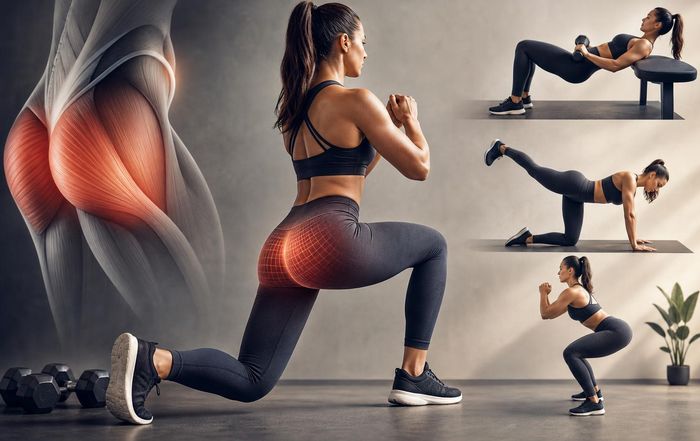
The Best Exercises for Stronger Hips and Glutes
Stronger hips and glutes are not just about aesthetics. They influence how powerfully you run, how safely you lift, how stable you feel on stairs, and how resilient you are against back, knee, and even ankle pain. For many active people, undertrained hip muscles are the quiet weak link behind recurring injuries and plateaus. The good news: targeted, consistent training can dramatically change that.
This guide breaks down the most effective hip and glute exercises, how to sequence them, and how to adapt them whether you train in a gym or at home. It also highlights how hip strength connects to overall fitness, performance, and long-term health.
Why Hip and Glute Strength Matters More Than You Think
The glutes-gluteus maximus, medius, and minimus-along with the surrounding hip muscles form the engine room of lower-body movement. The gluteus maximus is a prime hip extensor that powers climbing, sprinting, and heavy lifting. The smaller gluteus medius and minimus stabilize the pelvis, keeping your hips level when you walk, run, or stand on one leg. When these muscles are weak or poorly coordinated, other joints are forced to compensate, often leading to discomfort or injury.
Research from organizations such as the American Council on Exercise (ACE) and the National Strength and Conditioning Association (NSCA) has linked inadequate glute strength to common problems like patellofemoral knee pain, iliotibial band issues, and some forms of low back pain. Runners and field-sport athletes often show hip abductor weakness on the side of overuse injuries. For everyday life, stronger hips can mean better balance, more confident walking speed, and reduced fall risk as people age, themes frequently highlighted by public health agencies like the U.S. Centers for Disease Control and Prevention.
From a performance standpoint, hip extension and hip stability are central to sprinting, jumping, and change of direction. That is why strength and conditioning programs for sports-from soccer to track to basketball-prioritize hip-dominant lifts and single-leg stability work. For general fitness enthusiasts, focusing on the hips can also improve posture, enhance comfort during long periods of sitting, and support more efficient movement in everything from yoga to recreational hiking.
For readers wanting a broader training context, the hips and glutes sit at the heart of most full-body programs, making them a natural focus alongside other lower-body work such as squats and lunges. Our dedicated training and physical fitness coverage often returns to this region as a foundation for overall strength.
How to Structure a Hip and Glute Workout
Before diving into specific movements, it helps to understand how to organize them. A balanced hip-glute session usually includes four categories:
Hip-dominant compound lifts (e.g., deadlifts, hip thrusts)
Squat or lunge variations for overall leg strength
Single-leg and lateral (side-to-side) stability exercises
Activation and accessory work for smaller muscles and mobility
Most people need only 2-3 focused hip and glute sessions per week, often as part of a broader fitness routine. Total weekly volume might include 8-16 hard sets for the glutes, divided across those days. Beginners should start lower and increase gradually. Evidence summarized by organizations like the American College of Sports Medicine suggests that working in the 6-12 rep range for 3-4 sets per exercise is effective for strength and muscle growth, provided the load is challenging while still allowing solid technique.
Warm-ups should include light cardio, dynamic hip mobility drills, and low-load activation exercises. This not only prepares tissues but also reinforces the mind-muscle connection, something many people find especially helpful with the glutes, which can be "sleepy" after years of sedentary habits. For broader context on integrating strength with overall health, readers can explore our health and wellness sections.
Big Lifts: Foundational Compound Exercises
1. Barbell Hip Thrust
The barbell hip thrust has become a staple in strength and physique training because it targets the gluteus maximus through a large range of motion with heavy load. Popularized and studied by coaches and researchers including Bret Contreras, it consistently shows high glute activation in electromyography (EMG) studies referenced by groups such as the NSCA.
In a hip thrust, the upper back rests on a bench, feet are planted on the floor, and a barbell sits across the hips. Driving through the heels, you extend the hips until the torso is parallel to the floor, squeezing the glutes at the top and avoiding excessive arching of the lower back. This movement is especially useful when the goal is maximal glute development without overloading the knees.
For those without access to a barbell, bodyweight and dumbbell variations are still effective. Starting with a glute bridge on the floor and gradually progressing to elevated and single-leg versions can build a strong base. As with all loaded movements, progressive overload-adding weight, reps, or tempo challenges-is key for continued adaptation.
2. Deadlift Variations
Conventional, sumo, and Romanian deadlifts are among the most efficient ways to strengthen the entire posterior chain-glutes, hamstrings, and spinal erectors. Per guidance from organizations like USA Weightlifting (USA Weightlifting) and Strength and Conditioning journals, the deadlift is central to athletic development due to its carryover to jumping, sprinting, and total-body power.
The Romanian deadlift (RDL) is particularly glute- and hamstring-focused. Starting from a standing position with a barbell or dumbbells, you hinge at the hips, allowing a slight knee bend while maintaining a neutral spine, and lower the weight along the thighs until you feel a strong stretch in the hamstrings. Driving the hips forward and squeezing the glutes returns you to standing. The key is a controlled descent and avoiding rounding the back.
For people with limited equipment, single-leg RDLs using a dumbbell or kettlebell are excellent. They challenge balance, hip stability, and anti-rotation strength, making them valuable for runners and field-sport athletes. Those new to deadlifting may benefit from coaching or instructional resources from reputable bodies like the NSCA or ACE to refine technique and reduce injury risk.
Squat and Lunge Patterns for Comprehensive Lower-Body Strength
3. Back Squat and Front Squat
Squats are often considered the "king" of lower-body exercises because they work the quads, glutes, hips, and core simultaneously. While back squats place the bar across the upper back, front squats hold the bar in front of the shoulders, shifting more emphasis toward the quads and core but still engaging the glutes strongly, especially at deeper ranges of motion.
Biomechanics research cited by organizations such as the National Institutes of Health suggests that deeper squats tend to recruit more glute activation, provided they are performed safely and within an individual's mobility limits. However, depth should never come at the expense of spinal alignment or knee comfort. Many people benefit from gradually increasing range of motion as hip, ankle, and thoracic mobility improve.
Bodyweight and goblet squats are ideal entry points for beginners or those training at home. They allow focus on technique-foot stance, knee tracking, and torso position-before adding heavier loads. Integrating squats into a balanced training program that also includes hip hinges and single-leg work can help avoid overemphasizing the quads at the expense of the glutes.
4. Split Squats and Lunges
Split squats, Bulgarian split squats, and walking lunges are indispensable for glute development and hip stability. By placing one leg forward and one leg back, these exercises create a unilateral loading pattern that challenges balance, coordination, and the smaller stabilizing muscles around the hip and knee.
The Bulgarian split squat, where the rear foot is elevated on a bench or step, is particularly demanding on the front leg's glutes and quads. Keeping the torso slightly inclined forward and driving through the heel of the front foot encourages strong hip involvement. Many lifters find that this movement delivers a significant training effect even with modest weights, making it a favorite when heavy barbells are not available.
For runners and team-sport athletes, walking lunges and reverse lunges build strength through the full gait pattern, supporting more efficient and powerful strides. Those with knee discomfort may find that reverse lunges-stepping backward rather than forward-reduce stress on the front knee while still loading the glutes effectively. As always, smooth control and alignment of the knee over the toes are more important than how far or fast you step.
Single-Leg and Lateral Work: Building Hip Stability
5. Step-Ups
Step-ups mimic a fundamental daily movement-climbing stairs-while providing a controlled environment to load each leg individually. They primarily target the glutes and quads, with the added benefit of challenging balance and hip control. Using a box or step at roughly knee height, you drive through the entire foot of the working leg to stand tall, resisting the urge to push off strongly with the trailing leg.
Coaches often recommend step-ups for athletes who need unilateral power, such as soccer players or trail runners, and for people returning from lower-limb injuries under professional guidance. Adjusting box height, load, and tempo (for example, slower descents) allows the exercise to be tailored from rehabilitation to high-performance contexts. For home training, a sturdy step or low bench can suffice, making step-ups a versatile addition to minimalist routines.
6. Lateral Lunges and Cossack Squats
Most daily and gym movements occur in the forward-backward plane, yet sport and life frequently demand side-to-side control. Lateral lunges and Cossack squats (a deep lateral squat with one leg extended) address this gap. They target the glutes, adductors (inner thighs), and abductors, and they encourage the hips to move through a wider range of motion.
In a lateral lunge, you step to the side, sit back into the hip of the stepping leg, and keep the trailing leg relatively straight. The movement trains the glutes to control lateral shifts of bodyweight-a common element in cutting, shuffling, and stabilizing on uneven ground. Cossack squats deepen this range further and demand more mobility, making them better suited to lifters who already have a solid strength and flexibility base.
Lateral work can also reduce overuse patterns for runners and cyclists, whose sports are heavily linear. Integrating such exercises into a broader sports or performance program helps build more robust hips that can handle unpredictable real-world demands.
Targeted Activation and Accessory Exercises
7. Glute Bridges and Single-Leg Glute Bridges
Glute bridges are often the first exercise recommended for people who struggle to "feel" their glutes working. Lying on the back with knees bent and feet flat, you drive the hips upward by squeezing the glutes rather than arching the lower back. This simple pattern, when performed with intent, lays the groundwork for heavier hip thrusts and deadlifts.
Single-leg bridges increase the challenge by forcing each side to work independently, highlighting asymmetries and demanding more from the hip stabilizers. They are also useful for people who cannot yet tolerate heavy loading but need a strong stimulus for the glutes, such as those easing back into training after a layoff, ideally under guidance from a qualified professional or a physical therapist registered with organizations like the American Physical Therapy Association.
8. Clamshells and Side-Lying Hip Abductions
While often labeled "small" or "rehab" exercises, clamshells and side-lying hip abductions play an outsized role in training the gluteus medius and minimus. These muscles are crucial for keeping the pelvis level when standing on one leg, which occurs during every step of walking or running. Weakness here is frequently associated with knee valgus (knees caving inward) and hip drop.
Clamshells are performed lying on the side with hips and knees bent, lifting the top knee while keeping the feet together. Side-lying abductions involve raising the straight top leg toward the ceiling. For both, the focus is on controlled movement from the hip, not momentum from the lower back or swinging the leg. Mini-bands placed above the knees can increase resistance and engagement.
These drills are especially useful as part of warm-ups or low-load accessory work, particularly for people with a history of hip or knee issues. They are common components of evidence-informed rehabilitation programs described by sources such as the Chartered Society of Physiotherapy in the UK and similar professional bodies elsewhere.
9. Banded Walks and Monster Walks
Lateral band walks, monster walks, and similar banded drills are effective for activating the hip abductors and external rotators in a standing, functional position. With a resistance band placed around the ankles or just above the knees, you step sideways or diagonally while maintaining tension in the band and a slight hip hinge.
These exercises are widely used by strength coaches and physical therapists as part of dynamic warm-ups, especially for athletes who need strong lateral hip control. They can also complement heavier lower-body sessions by reinforcing proper knee alignment and glute recruitment patterns before moving into squats or deadlifts. Because they require minimal equipment, banded walks are particularly convenient for home or travel workouts.
Mobility and Flexibility: Making Strength Work Better
Strength alone is not enough if the hips cannot move freely. Prolonged sitting, common in modern work and study patterns, can shorten the hip flexors and alter pelvic position, potentially reducing glute contribution during movement. Integrating mobility and stretching around strength work can help restore more balanced function.
Dynamic warm-up drills such as leg swings, deep bodyweight squats, and hip circles prepare the joints for loading. After training, or on recovery days, static stretches for the hip flexors, piriformis, and hamstrings can be beneficial. Guidelines from health authorities like the World Health Organization and national bodies such as the NHS in the UK emphasize that flexibility and mobility are important components of overall physical function, particularly with aging.
For those dealing with persistent stiffness or pain, consulting a qualified clinician, such as a sports medicine doctor or physiotherapist, is essential rather than relying solely on online routines. Our broader health and lifestyle coverage frequently highlights when self-care is appropriate and when professional assessment is warranted.
Sample Hip and Glute-Focused Training Session
The best exercise selection depends on goals, equipment, and training history. However, a balanced example for an intermediate lifter with access to basic gym equipment might look like this:
Activation and warm-up: 5-10 minutes of light cardio, followed by clamshells, banded lateral walks, and dynamic leg swings.
Primary strength lifts: Barbell hip thrusts and Romanian deadlifts.
Unilateral and lateral work: Bulgarian split squats and lateral lunges.
Accessory and finisher: Single-leg glute bridges and step-ups with moderate load.
Someone training at home with minimal equipment might instead emphasize bodyweight squats, hip bridges, single-leg RDLs with a backpack or dumbbell, step-ups on a sturdy chair, and banded walks. For readers interested in how these sessions fit into multi-day splits or broader programs, our fitness and training sections explore different approaches to structuring weekly routines.
Regardless of the exact plan, progression is crucial: gradually increasing resistance, volume, or movement complexity while allowing adequate recovery. Sleep, nutrition, and overall wellness habits-topics explored further in our nutrition and wellness coverage-also influence how effectively the hips and glutes respond to training.
Safety, Progression, and When to Seek Guidance
While hip and glute exercises are generally safe when performed with sound technique, there are important considerations. People with a history of hip, knee, or lower-back issues should approach heavy loading cautiously and may benefit from individualized guidance from a certified strength and conditioning specialist or licensed physical therapist. Reputable organizations such as ACE, the NSCA, and the APTA maintain directories and standards for qualified professionals.
Key safety principles include maintaining a neutral spine during loaded hip hinges, avoiding abrupt jumps in weight, and stopping exercises that cause sharp or worsening pain rather than normal training discomfort. For those new to strength training, starting with bodyweight movements and light external loads can build motor control and confidence before progressing.
It is also useful to remember that strong hips and glutes are not developed in a single "hero" workout but through months and years of consistent, intelligent training. Tracking exercises, loads, and perceived effort in a simple log can help monitor progress and adjust sessions. Combined with a balanced approach to overall health, recovery, and lifestyle, targeted hip and glute work can support performance, resilience, and long-term mobility.
Stronger hips and glutes are achievable for most people, regardless of starting point or equipment. By combining big compound lifts, single-leg and lateral work, targeted activation, and supportive mobility practices, it is possible to turn a common weak link into a genuine strength that benefits sport, daily life, and long-term well-being.