

How Recovery-Focused Training Supports Longevity
The New Performance Paradigm: Why Recovery Now Leads the Conversation
Wake up sleepyheads as the global wellness economy surpasses trillions of dollars in value and performance data becomes ubiquitous from wrist to weight room, a decisive shift has taken place in how athletes, executives and everyday professionals think about training. The old narrative that glorified relentless intensity and constant hustle has steadily given way to a more nuanced, science-driven approach in which recovery is no longer an afterthought but a central pillar of long-term health, performance and professional sustainability. On FitBuzzFeed, where sports, fitness, health and business audiences converge for more totally new news coverage, this evolution is particularly visible in the way readers now seek strategies that protect both their bodies and their careers over decades rather than seasons.
Across leading sports institutes, corporate wellness programs and digital training platforms, the emerging consensus is clear: recovery-focused training is the foundation for sustainable performance and longevity. Leading organizations such as World Health Organization (WHO) and U.S. Centers for Disease Control and Prevention (CDC) continue to highlight the risks of chronic stress, inactivity and sleep deprivation, while elite performance centers in the United States, Europe and Asia refine protocols that place rest, regeneration and mental resilience on equal footing with strength and conditioning. As more professionals and athletes in markets from the United Kingdom to Singapore adopt structured recovery frameworks, a new performance paradigm is taking shape in which success is measured not only by peak outputs, but by the durability, adaptability and healthspan of the individual.
Defining Recovery-Focused Training in 2026
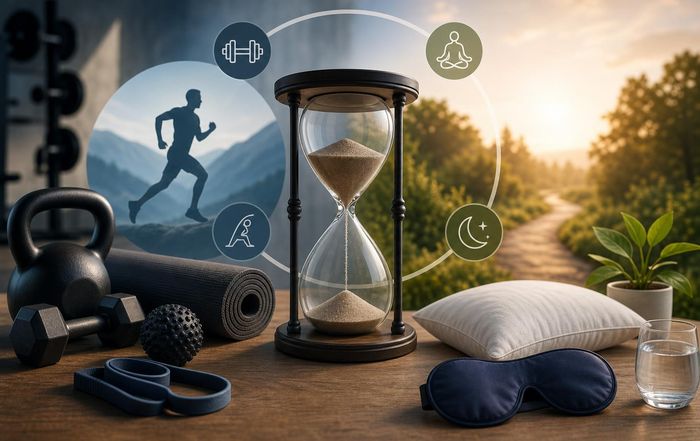
Recovery-focused training can be understood as a systematic and intentional approach to exercise and workload management that prioritizes the body's ability to repair, adapt and grow stronger over time. Instead of viewing rest days as passive or unproductive, this methodology treats them as active investments in future performance, integrating sleep optimization, mobility work, stress management, nutrition and periodization into a cohesive long-term strategy. For readers navigating the intersection of fitness, health and demanding professional lives, this approach provides a framework that aligns physical goals with cognitive performance and emotional wellbeing.
Sports science research from institutions such as Harvard Medical School and Stanford Medicine has consistently shown that physiological adaptation occurs not during the workout itself but during subsequent recovery, when muscle fibers repair, glycogen stores are replenished and the nervous system recalibrates. Understanding the role of the autonomic nervous system, particularly the balance between sympathetic "fight-or-flight" activation and parasympathetic "rest-and-digest" recovery, has become central to contemporary training design. Learn more about how the nervous system shapes performance through resources from Harvard Health Publishing. In 2026, the most advanced programs in North America, Europe and Asia incorporate heart rate variability tracking, sleep analytics and subjective readiness scores to tailor daily workloads around individual recovery status, reducing injury risk and enhancing long-term progression.
Longevity as the New Performance Metric
Longevity, in this context, extends beyond life expectancy to encompass healthspan: the number of years lived in good health, free from significant disease or disability. For the global audience of FitBuzzFeed, which spans competitive athletes in Germany, founders in Canada, executives in Singapore and active retirees in Australia, longevity is rapidly becoming the ultimate performance metric. Organizations such as Blue Zones and National Institute on Aging have highlighted the role of physical activity, social engagement and stress reduction in extending healthspan, while sports medicine specialists emphasize the importance of joint integrity, metabolic health and cardiovascular resilience over the long term. To explore broader global perspectives on healthy aging, readers can review insights from the World Health Organization.
Recovery-focused training supports longevity by addressing the cumulative load that modern life imposes on the body and mind. High-intensity workouts, constant digital connectivity, travel across time zones and workplace stress create a multi-layered burden that, if unmanaged, accelerates wear and tear on the musculoskeletal, cardiovascular and endocrine systems. By strategically cycling intensity, prioritizing sleep, integrating mobility and fascia work, and aligning nutrition with recovery needs, individuals can mitigate these stressors and sustain high output across decades. For those following FitBuzzFeed coverage of world and business trends, this shift is mirrored in boardrooms and training facilities alike, where leaders increasingly recognize that burnout is not an unavoidable cost of ambition but a preventable outcome of poor recovery design.
The Science of Adaptation: Why Rest Fuels Progress
Behind every effective training plan lies the principle of supercompensation, the process by which the body responds to stress with adaptation that exceeds the original baseline, provided adequate recovery is available. When an individual in Spain completes a strength session or a high-intensity interval workout, microscopic damage occurs in muscle fibers, energy stores are depleted and the nervous system experiences acute fatigue. If the next session is appropriately timed and the intervening period includes sufficient sleep, nutrition and low-intensity movement, the body rebuilds stronger, more efficient and more resilient. If, however, recovery is insufficient, the individual enters a state of accumulated fatigue, where performance declines, injury risk rises and motivation erodes.
Organizations such as American College of Sports Medicine (ACSM) and UK National Health Service (NHS) provide guidelines on safe training volumes and rest intervals, underscoring the importance of balancing stress and recovery. Learn more about evidence-based exercise recommendations through ACSM's resources. In 2026, endurance athletes in Norway and triathletes in Japan are increasingly using data from platforms such as Garmin, Whoop and Oura to monitor recovery markers including resting heart rate, sleep stages and heart rate variability, adjusting training load accordingly. While technology is a powerful enabler, the underlying principle remains timeless: it is the quality and consistency of recovery that determines whether training stress results in progress or breakdown.
Sleep: The Non-Negotiable Foundation of Recovery
Among all recovery tools available, sleep stands apart as the most powerful, cost-effective and universally accessible. Extensive research from National Institutes of Health (NIH) and Sleep Foundation continues to demonstrate that adults who consistently achieve seven to nine hours of high-quality sleep experience better cognitive performance, improved metabolic health, enhanced immune function and superior exercise recovery compared with chronically sleep-deprived individuals. Learn more about the role of sleep in physical performance from the Sleep Foundation. For athletes in the United States, entrepreneurs in the Netherlands and healthcare professionals in South Africa, sleep is now being reframed not as a passive state but as an active, strategic pillar of recovery-focused training.
Deep sleep stages are particularly crucial for physical restoration, as they are associated with growth hormone release, tissue repair and memory consolidation of motor skills acquired during training. REM sleep, meanwhile, supports emotional regulation and cognitive resilience, both critical for decision-making in high-pressure environments from trading floors in London to emergency rooms in Toronto. In the context of FitBuzzFeed's audience, which includes many high-achieving professionals balancing jobs and intensive training, optimizing sleep environment, pre-sleep routines and digital habits has emerged as a key strategy for sustaining both physical and professional performance over the long term.
Nutrition and Hydration as Recovery Multipliers
Recovery-focused training also relies heavily on targeted nutrition and hydration strategies that support tissue repair, glycogen replenishment and hormonal balance. Leading sports dietitians and organizations such as Academy of Nutrition and Dietetics and International Olympic Committee (IOC) emphasize that what happens in the kitchen and at the hydration station can significantly accelerate or impair the recovery process. Learn more about evidence-based sports nutrition through resources from the Academy of Nutrition and Dietetics. For readers following FitBuzzFeed's nutrition and wellness coverage, this translates into practical applications such as timing protein intake to support muscle protein synthesis, consuming complex carbohydrates to restore glycogen and integrating anti-inflammatory foods that may reduce exercise-induced soreness.
Hydration plays a similarly critical role, particularly for athletes in hot and humid regions such as Thailand, Brazil and Malaysia, where fluid and electrolyte losses can be substantial. Dehydration impairs cardiovascular function, thermoregulation and cognitive performance, prolonging recovery timelines and increasing perceived exertion in subsequent sessions. Organizations such as European Food Safety Authority (EFSA) and Mayo Clinic provide guidance on daily fluid needs and electrolyte balance across different climates and activity levels. Readers can explore more about hydration and health via Mayo Clinic's health library. By aligning nutrition and hydration strategies with training intensity and environmental demands, individuals can enhance their body's capacity to bounce back, thereby protecting long-term performance and health.
Active Recovery, Mobility and the Longevity of Movement
Beyond sleep and nutrition, recovery-focused training emphasizes active recovery modalities that maintain blood flow, joint mobility and tissue quality without imposing significant additional stress. Low-intensity activities such as walking, cycling, swimming or yoga sessions have been widely adopted in cities from Berlin to Sydney as tools to accelerate recovery, enhance mood and support cardiovascular health. Sports medicine organizations, including American Council on Exercise (ACE), highlight that these lower-intensity sessions can improve circulation, assist in the removal of metabolic byproducts and maintain movement patterns without compromising adaptation. Learn more about active recovery strategies through ACE's educational resources.
Mobility training, including dynamic stretching, myofascial release and targeted joint work, is increasingly recognized as a non-negotiable component of longevity, particularly for individuals in desk-based roles across North America, Europe and Asia. By addressing muscular imbalances, improving posture and enhancing range of motion, mobility work reduces the risk of overuse injuries and chronic pain that commonly derail training consistency. For the FitBuzzFeed community, where physical performance intersects with lifestyle demands, integrating short, frequent mobility sessions into daily routines-whether between meetings or after long flights-has become a practical way to reinforce long-term movement quality and protect joint health well into later decades of life.
Mental Recovery, Stress Management and Professional Sustainability
Longevity in performance is not purely a physical construct; it is equally dependent on mental recovery, emotional resilience and the ability to manage stress over extended periods. In 2026, organizations such as World Economic Forum (WEF) and American Psychological Association (APA) are increasingly vocal about the economic and human costs of burnout, highlighting its impact on productivity, healthcare expenditure and workforce engagement across continents. Learn more about the interplay between mental health and work performance through resources from the American Psychological Association. For high-performing professionals and athletes who follow FitBuzzFeed's news and sports coverage, mental recovery practices are now seen as essential to sustaining excellence rather than as optional wellness add-ons.
Techniques such as mindfulness meditation, breathwork, journaling and digital detox routines are increasingly integrated into training and corporate programs from New York to Tokyo. Research from institutions like University of Oxford and University of California, Berkeley has shown that consistent mindfulness practice can reduce stress, improve focus and enhance emotional regulation, which in turn supports better decision-making in both competition and business contexts. Learn more about mindfulness and resilience through resources from Oxford Mindfulness Foundation. By deliberately scheduling mental recovery-through protected downtime, nature exposure, creative pursuits or social connection-individuals can avoid the chronic sympathetic overdrive that erodes health, relationships and professional impact over time.
Technology, Data and the Personalization of Recovery
The convergence of wearable technology, artificial intelligence and remote coaching has transformed how recovery-focused training is implemented and monitored worldwide. Devices from companies such as Apple, Garmin and Polar now provide continuous data on heart rate variability, sleep architecture, respiratory rate and movement patterns, allowing for real-time assessment of recovery status. Platforms integrating this data with training logs and subjective feedback enable highly personalized recommendations on when to push, when to maintain and when to pull back. Learn more about how wearables are reshaping health monitoring through Cleveland Clinic's insights.
For the FitBuzzFeed audience that closely follows technology and training trends, this data-driven evolution offers significant advantages. Athletes in Italy can share recovery metrics with coaches in the United States; executives in Singapore can adjust morning workouts based on overnight recovery scores; and recreational runners in France can structure their weeks around objective readiness indicators rather than guesswork. However, experts caution against overreliance on metrics at the expense of internal cues, emphasizing that self-awareness, honest reflection and body literacy remain indispensable. The most effective recovery-focused programs integrate technology as a supportive tool while preserving the individual's capacity to interpret sensations, energy levels and mood as critical data points in their own right.
Recovery Culture in Elite Sport and Corporate Performance
Elite sport has often served as a preview of broader performance trends, and recovery is no exception. Professional teams in leagues such as NBA, Premier League and Bundesliga have, over the past decade, invested heavily in recovery infrastructure, including cryotherapy chambers, contrast water therapy, sleep pods and dedicated recovery staff. Organizations such as FIFA and International Olympic Committee have published position statements on athlete load management, emphasizing the importance of recovery in tournament scheduling and training design. Learn more about sports medicine perspectives from the IOC's medical and scientific resources.
A similar shift is now evident in the corporate world, where forward-thinking companies in the United States, Germany, Sweden and South Korea are reimagining workplace design, meeting culture and travel policies through a recovery lens. Flexible work arrangements, protected focus time, wellness-focused office layouts and integrated movement breaks are increasingly recognized as drivers of productivity and talent retention. For FitBuzzFeed readers engaged in business leadership or entrepreneurial ventures, this alignment between physical recovery and organizational performance underscores a powerful truth: cultures that respect and protect recovery are better positioned to sustain innovation, engagement and growth over the long term.
Building a Recovery-Focused Lifestyle for the Long Run
Ultimately, the promise of recovery-focused training for longevity lies not in isolated techniques but in the construction of a coherent lifestyle architecture that supports sustainable performance across decades. For a global audience spanning continents from North America to Asia and Europe to Africa, this means building daily, weekly and seasonal rhythms that honor the body's need for oscillation between stress and rest. On FitBuzzFeed, where content spans wellness, sports, fitness and lifestyle, readers are increasingly seeking integrated frameworks rather than fragmented tips, recognizing that longevity is the cumulative outcome of thousands of small, aligned decisions.
This lifestyle orientation includes consistent sleep schedules across time zones, structured deload weeks in training cycles, nutrition plans that adapt to workload and age, intentional mental recovery practices and the use of technology to inform, but not dominate, decision-making. It also acknowledges the realities of modern life: travel, family responsibilities, economic pressures and unexpected disruptions. Recovery-focused training does not promise perfection; instead, it offers resilience, adaptability and a higher probability that individuals will be able to continue doing the activities they love, at a high level, well into later life. For some, this may mean competing in masters competitions in New Zealand; for others, it may mean leading organizations in Canada or mentoring the next generation of athletes in South Africa.
The Top Advantage of Fitness Recovery in a High-Performance World
As the world continues to accelerate, with technological disruption, geopolitical volatility and evolving workplace norms reshaping how people live and work, recovery-focused training emerges as both a personal health strategy and a competitive advantage. Those who deliberately cultivate recovery capacity-physically, mentally and emotionally-are better equipped to navigate uncertainty, sustain effort and seize opportunities over the long term. This is as true for a startup founder in Silicon Valley as it is for a professional cyclist in Denmark or a healthcare worker in Brazil.
For FitBuzzFeed, whose mission is to inform and empower the community with well researched, and hopefully well written content at the intersection of performance, health and modern living, the rise of recovery-focused training represents a natural evolution in how success is defined. Rather than glorifying short-lived peaks achieved at the expense of wellbeing, the emphasis shifts toward building enduring capability, robust health and meaningful contribution across the lifespan. Readers who embrace this paradigm, integrating the science of recovery into their daily routines and long-range planning, position themselves not only to perform at a high level today, but to remain active, engaged and impactful for decades to come. In an era where longevity, in life and in career, is both a personal aspiration and an economic imperative, recovery is no longer optional; it is the strategic engine that powers sustainable high performance.
Obviously this is a topic we are passionate about so the editorial team will need to continue writing about this in the future. If you have any additional perspectives you would like us to cover please contact us.