

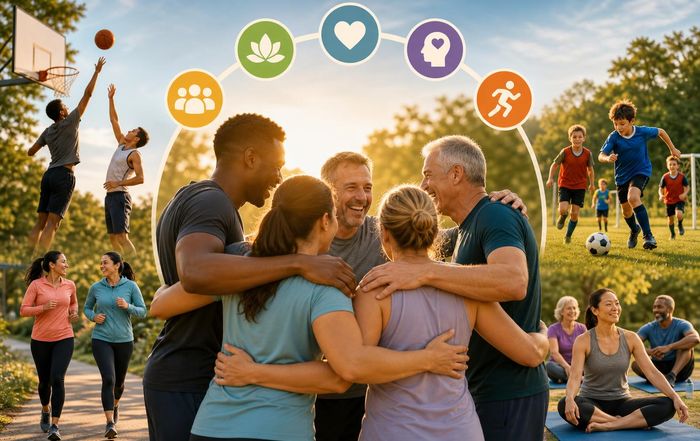
How Community Sports Improve Everyday Wellbeing
Community Sports at the Heart of Modern Wellbeing
As hybrid work, urbanization and digital lifestyles reshape how people live and interact, community sports have quietly become one of the most powerful, accessible and trusted levers for improving everyday wellbeing. From local football leagues in the United Kingdom and Germany to walking clubs in Canada and Australia, from futsal courts in Brazil to badminton halls in Singapore and Thailand, organized play at the neighborhood level is evolving into a strategic asset for public health, social cohesion and even economic resilience. For super sporty followers of FitBuzzFeed, who already navigate the intersections of fitness, health, business and lifestyle, community sports now represent not merely a leisure option but a cornerstone of a sustainable, high-performance way of living.
As governments, employers and health systems worldwide confront rising rates of chronic disease, loneliness and workplace burnout, the role of community sports is being reassessed with a seriousness that would have seemed unlikely a decade ago. Public health data from organizations such as the World Health Organization highlight the persistent global burden of physical inactivity, while research from institutions like Harvard T.H. Chan School of Public Health and the Mayo Clinic has deepened understanding of how regular, moderate exercise and social connection combine to protect both physical and mental health. Community sports sit precisely at this intersection, blending movement, belonging and purpose in a way that gyms, apps or short-term fitness challenges often struggle to replicate. Readers who explore the fitness coverage on FitBuzzFeed Fitness will recognize that this blend is increasingly central to evidence-based wellbeing.
Physical Health Benefits That Extend Beyond the Scoreboard
The most visible contribution of community sports remains physical health, yet the mechanisms are broader and more nuanced than simply "burning calories." Regular participation in structured, enjoyable activities such as five-a-side football, basketball, netball, swimming, running clubs or community cycling groups helps individuals meet or exceed the physical activity guidelines promoted by the World Health Organization, which recommend at least 150 to 300 minutes of moderate-intensity aerobic activity per week for adults. Those who engage in community sports often surpass these thresholds because the social and competitive elements make consistency easier to sustain than solitary exercise routines, a pattern that has been repeatedly observed in cohort studies and longitudinal fitness research.
In practical terms, this consistent activity improves cardiovascular fitness, muscular strength, metabolic health and functional mobility, which in turn reduces the risk of noncommunicable diseases such as type 2 diabetes, coronary heart disease and certain cancers. Resources from NHS Inform in the United Kingdom and Centers for Disease Control and Prevention in the United States show that even modest increases in weekly activity can significantly lower health risks, but community sports amplify these gains by encouraging higher intensity intervals, agility, balance and coordination. For many participants in Europe, North America, Asia and Africa, weekly games or training sessions become the anchor around which other health behaviors stabilize, including improved sleep, better hydration and more mindful nutritional choices, themes that are frequently discussed on FitBuzzFeed Nutrition and FitBuzzFeed Health.
Crucially, community sports often provide a pathway into physical activity for individuals who might otherwise feel excluded from traditional fitness environments. Walking football for older adults in Spain and Italy, inclusive running groups in South Africa and Brazil, and adaptive sports programs in countries such as Canada, Sweden and Japan demonstrate that with thoughtful design, the physical benefits of movement can be extended to people with varying abilities, ages and health conditions. This inclusivity not only broadens participation but also reinforces a culture in which physical activity is viewed as a normal, lifelong behavior rather than a temporary project, supporting the long-term wellbeing narratives that FitBuzzFeed seeks to champion.
Mental Health, Resilience and the Psychology of Belonging
Beyond the measurable gains in cardiovascular health and strength, community sports exert a profound influence on mental wellbeing, which is increasingly recognized as a central pillar of overall health. Research from institutions like Johns Hopkins Medicine and Stanford Medicine has shown that regular physical activity can reduce symptoms of anxiety and depression, improve mood and boost cognitive performance. However, when that activity is embedded in a supportive group setting, the psychological benefits expand considerably, touching on identity, self-esteem and resilience in ways that solitary exercise rarely matches.
Community sports create consistent opportunities for social interaction, shared goals and mutual support, which counter the rising tide of social isolation reported in countries as diverse as the United States, Japan, Germany and South Korea. For people navigating demanding careers, family responsibilities or academic pressures, weekly training sessions or matches offer structured time away from screens and obligations, while still delivering a sense of productivity and progress. The camaraderie found in local leagues, whether in London, Toronto, Sydney or Singapore, becomes a buffer against stress and burnout, reinforcing the themes of balance and sustainable high performance that appear frequently in FitBuzzFeed Wellness and FitBuzzFeed Lifestyle.
Moreover, the inherent challenges of sport-coping with losses, managing performance anxiety, recovering from injury, learning new skills-serve as a training ground for psychological resilience. Athletes at every level learn to set goals, receive feedback and adapt to changing circumstances, skills that translate directly into workplace performance and leadership. Insights from American Psychological Association resources on resilience underscore how mastery experiences and social support are key drivers of mental toughness; community sports provide both in an accessible, repeatable format. For younger participants in schools and youth clubs across Europe, Asia and Africa, these experiences can shape lifelong attitudes toward challenge, teamwork and self-care.
Social Capital, Inclusion and Community Cohesion
One of the most underrated outcomes of community sports is the development of social capital, the networks of relationships and norms of trust that enable communities to function effectively. Sociologists and urban planners have long noted that shared public activities, from neighborhood festivals to local markets, help build cohesion, but sports have a unique capacity to bring together individuals across age, ethnicity, profession and socioeconomic status. In multicultural cities such as New York, London, Amsterdam, Johannesburg and Singapore, a local football or basketball league can include students, gig workers, executives and recent immigrants on the same team, creating connections that might never form in more segmented social environments.
This bridging function has become especially important as remote and hybrid work models continue to reshape daily routines in 2026. With fewer informal interactions in offices and public spaces, community sports fill a growing gap in social infrastructure, providing reliable, recurring opportunities for face-to-face engagement. Urban policy discussions in outlets like Brookings Institution and World Economic Forum increasingly reference sports facilities and community clubs as vital components of resilient cities, alongside transportation, housing and digital connectivity. In regions experiencing rapid urban growth, such as parts of Asia, Africa and South America, investment in community sports infrastructure is emerging as a strategic tool for managing youth engagement, preventing crime and fostering a sense of shared identity.
At a micro level, local clubs and leagues often serve as hubs for volunteerism, mentoring and informal support. Coaches, many of whom are volunteers, play roles that extend beyond tactics and drills, offering guidance on education, career choices and personal challenges. Parents and community members who organize events, maintain facilities or coordinate schedules contribute to a culture of shared responsibility. For readers interested in how such grassroots engagement intersects with broader world events and social trends, the coverage on FitBuzzFeed World provides additional context on how community initiatives reflect and shape societal change.
Economic and Business Dimensions of Community Sports
For a business-oriented audience, the economic implications of community sports are increasingly compelling. At a macro level, physically active populations reduce the burden on healthcare systems, improve workforce productivity and extend healthy working years, outcomes that are documented in reports from the Organisation for Economic Co-operation and Development and World Bank. At a micro level, local sports ecosystems support employment and entrepreneurship across coaching, facility management, sports technology, apparel, nutrition, events and media, creating opportunities that align closely with the interests of readers following FitBuzzFeed Business and FitBuzzFeed Jobs.
Brands in the sports, wellness and lifestyle sectors are increasingly recognizing that authentic engagement with community sports delivers reputational benefits that traditional sponsorships sometimes fail to achieve. Instead of focusing solely on elite teams or major tournaments, companies in North America, Europe and Asia are investing in neighborhood courts, women's leagues, adaptive sports programs and youth development initiatives. This shift reflects a broader move toward purpose-driven branding, where measurable social impact is integrated into business strategy. Resources from Deloitte Insights and McKinsey & Company on purpose and sustainability in business highlight how such investments can strengthen customer loyalty, attract talent and mitigate reputational risk.
At the same time, digital platforms have lowered the barriers to organizing and monetizing local sports. Entrepreneurs and community leaders can now use scheduling and league-management tools, wearable devices, streaming services and social media to coordinate teams, analyze performance and attract sponsors. Technology coverage on FitBuzzFeed Technology has traced how these tools are reshaping not only professional sport but also the grassroots level, where data-driven training, remote coaching and online communities are becoming standard. For investors and executives, community sports thus represent both a societal priority and a growing market for products and services that enhance participation, safety and experience.
Technology, Data and the New Era of Community Sports
The integration of technology into community sports has accelerated markedly by 2026, creating new possibilities and new responsibilities. Wearable devices from companies such as Garmin, Apple, Samsung and Fitbit allow amateur athletes in countries from Finland and Norway to South Korea and New Zealand to track heart rate, recovery metrics, sleep patterns and training load with a level of precision once reserved for professionals. Aggregated data from these tools, when used responsibly, can help coaches and participants optimize training plans, reduce injury risk and monitor progress toward health goals. Educational content from Cleveland Clinic and Mayo Clinic has helped the public interpret these metrics in a medically informed way, bridging the gap between consumer technology and clinical guidance.
Simultaneously, digital platforms enable virtual and hybrid forms of community sport that transcend geography. Running clubs in Paris can coordinate joint challenges with groups in Tokyo or São Paulo, while basketball enthusiasts in Berlin, Toronto and Cape Town can share drills, tactics and performance videos through online communities. These global connections enrich local experiences, exposing participants to diverse perspectives and training philosophies while reinforcing a shared identity as part of a worldwide movement toward active living. For readers of FitBuzzFeed, who often engage with global news and trends through sections such as FitBuzzFeed News, this blending of local and global dimensions mirrors broader shifts in work, culture and communication.
However, the rise of data-driven community sports also raises questions about privacy, equity and digital fatigue. Not all participants have equal access to advanced devices or high-speed connectivity, and there is a risk that overemphasis on metrics can overshadow the intrinsic enjoyment of play. Thought leaders at organizations like Electronic Frontier Foundation and OECD have begun to explore how data governance, ethical design and inclusive infrastructure can ensure that the benefits of sports technology are widely shared. For community leaders and brands operating in this space, trustworthiness becomes a decisive factor: participants must feel confident that their data is secure and that technology is enhancing, rather than dominating, their sporting experience.
Nutrition, Recovery and Holistic Performance in Everyday Athletes
As community sports culture matures, there is a growing recognition that performance and wellbeing depend not only on training but also on nutrition, recovery and lifestyle habits. Guidance from institutions such as the Academy of Nutrition and Dietetics and Sports Dietitians Australia emphasizes that even recreational athletes benefit from thoughtful fueling strategies, adequate protein intake, hydration and timing of meals relative to activity. For a player in a local netball league in Melbourne, a weekend cyclist in the Netherlands or a futsal enthusiast in Malaysia, these principles can translate into more consistent energy, better adaptation to training and reduced injury risk, themes that are explored in depth on FitBuzzFeed Nutrition.
Recovery practices are similarly evolving. Concepts that were once the domain of elite sports-periodization, active recovery, sleep optimization, mobility work, cold exposure and mindfulness-are being adapted for everyday participants in community clubs across the United States, France, South Africa and beyond. Educational resources from Sleep Foundation and National Institutes of Health have helped demystify the role of sleep in performance and health, while evidence-based approaches to stretching, strength training and load management are increasingly accessible through online coaching platforms and local workshops. For readers who follow FitBuzzFeed Training and FitBuzzFeed Physical, this holistic view of performance aligns with a broader shift from short-term goals to sustainable, lifelong athleticism.
Importantly, this integrative approach also supports inclusivity and safety. Tailored nutrition and recovery plans can accommodate diverse cultural diets, work schedules and health conditions, ensuring that community sports remain accessible to people across different regions and backgrounds. In countries such as India, China, Brazil and South Africa, where traditional foods and family patterns play a central role in daily life, aligning sports participation with local nutritional practices helps embed wellbeing in existing cultural frameworks rather than imposing external models. This sensitivity to context is central to the editorial philosophy of FitBuzzFeed, which aims to connect global insights with the realities of readers' everyday lives.
Events, Local Identity and the Future of Community Sports
Community sports events-local tournaments, charity runs, city-wide leagues and regional festivals-serve as focal points for identity and celebration, linking individual wellbeing to collective pride. In 2026, many cities and regions are intentionally designing such events to support not only competition but also health education, environmental sustainability and economic development. Municipalities in Scandinavia, for example, integrate cycling and running events with campaigns on active transport and climate-friendly urban planning, while cities in North America and Asia combine community sports festivals with job fairs, wellness screenings and small-business showcases, reflecting the interconnected interests of readers who explore FitBuzzFeed Events and FitBuzzFeed Brands.
Global sporting calendars, from marathons in Berlin, Boston and Tokyo to mass-participation cycling events in the Netherlands and South Africa, increasingly feature community-oriented components alongside elite races. These inclusive categories invite walkers, first-time runners, families and adaptive athletes, reinforcing the message that sport belongs to everyone. Resources from World Athletics and International Olympic Committee highlight how legacy programs linked to major events can leave enduring benefits in host communities, including upgraded facilities, coaching education and increased participation among underrepresented groups. For local clubs and businesses, aligning with such events can create powerful platforms for visibility, partnership and long-term engagement.
Looking ahead, the future of community sports will likely be shaped by three converging forces: demographic change, technological innovation and evolving expectations around work and lifestyle. Aging populations in Europe, Japan and parts of North America will drive demand for age-friendly sports formats and facilities; rapidly growing youth populations in parts of Africa, South Asia and Latin America will require scalable, inclusive programs that channel energy and aspiration; and the continued normalization of hybrid work will free up time windows for daytime or flexible participation. For FitBuzzFeed, which operates at the crossroads of global trends and personal wellbeing, tracking and interpreting these shifts will remain a central editorial priority, as signaled by coverage across FitBuzzFeed and its dedicated verticals.
Building a Culture of Everyday Athleticism
Ultimately, the impact of community sports on everyday wellbeing can be understood as part of a broader cultural transition from viewing health as an individual, medicalized concern to recognizing it as a shared, lived experience. Community sports embody this shift by embedding movement, connection and purpose into the rhythms of daily life, whether that life unfolds in a small town in Finland, a megacity in China, a coastal community in New Zealand or a fast-growing hub in Africa or South America. They offer a practical, scalable way to operationalize many of the principles promoted by public health agencies, mental health advocates and performance experts, translating abstract guidelines into concrete habits and relationships.
For business leaders, policymakers, educators and citizens who engage with FitBuzzFeed across topics such as sports, health, business, jobs, technology and lifestyle, the message is increasingly clear: investment in community sports is not a peripheral luxury but a strategic necessity. It strengthens physical and mental health, builds social capital, supports economic opportunity and aligns with emerging expectations around sustainability, inclusion and purpose. The task now is to ensure that these benefits are accessible to people in every region, income group and life stage, through thoughtful design, equitable funding, responsible use of technology and ongoing collaboration between public, private and community stakeholders.
In this landscape, community sports are more than games; they are one of the most tangible expressions of a society's commitment to the everyday wellbeing of its people. As 2026 unfolds and the world continues to navigate uncertainty and change, the local pitch, court, pool or trail may prove to be one of the most reliable places where individuals can move, connect, grow and thrive together.